Product Overview
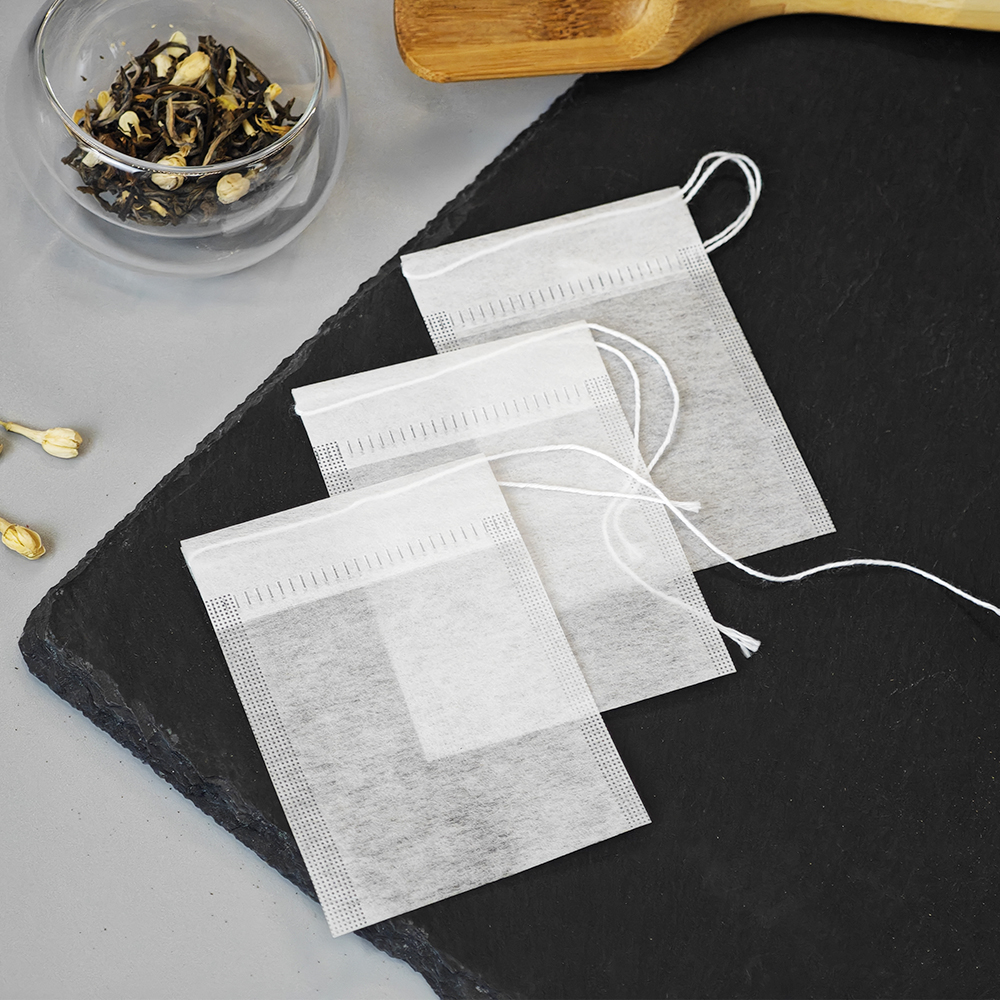
A non woven tea bag is a single-serve tea filtration pouch manufactured from spunbonded or meltblown polypropylene (PP) fibers that are mechanically, thermally, or chemically bonded into a continuous fabric web without the traditional warp-and-weft weaving process. Unlike woven mesh substrates—such as nylon (polyamide) or PLA monofilament fabrics—non-woven tea bag material is produced by extruding fine polymer filaments onto a moving belt, then fusing them at their contact points using calendar rollers, needle punching, or ultrasonic bonding. The result is a uniform, flat, paper-like filtration medium with engineered pore sizes, high permeability, and consistent tensile performance across the web.
The non woven tea bag format has been a workhorse of the global tea industry for decades. It is the substrate behind the familiar double-chamber and single-chamber flat tea bags found on supermarket shelves worldwide. Its dominance stems from a rare combination of high-speed convertibility, low raw material cost, food-contact safety, and reliable infusion performance. For high-volume tea brands, private-label retailers, contract packagers, and institutional food service procurement directors, the non woven tea bag remains the most economically efficient and operationally dependable single-serve filtration format available on the market today.
From a structural standpoint, non-woven filter fabric is characterized by a random fiber orientation that creates a tortuous filtration path. This three-dimensional fiber matrix traps fine tea particles while permitting rapid water penetration and flavor extraction. The material is engineered to deliver controlled permeability—typically measured in liters per square meter per second (l/m²/s)—ensuring that the brewed liquor is clear and free of sediment while the tea leaves have sufficient room to unfurl and release their aromatic compounds.
Modern non woven tea bag fabric is produced in continuous roll form, supplied on precision cores compatible with standard vertical form-fill-seal (VFFS) packaging machinery, including machines from IMA, Constanta, Teaplus, and other global OEM platforms. Rolls arrive pre-slitted to the exact width required by the packaging line, ready for immediate loading and production.
Materials
The non woven tea bag substrate is predominantly manufactured from food-grade polypropylene (PP), a thermoplastic polymer widely approved for direct food contact by the United States Food and Drug Administration (FDA 21 CFR 177.1520), the European Food Safety Authority (EFSA), and regulatory bodies across Asia-Pacific markets. Polypropylene is selected for this application due to its exceptional chemical inertness, thermal stability, low density, and outstanding fiber-forming characteristics.
The primary material used in a non woven tea bag is isotactic polypropylene homopolymer or random copolymer resin, extruded into fine-denier continuous filaments. The polymer is melt-extruded through spinneret dies at temperatures between 180°C and 230°C, drawn to orient the molecular chains, and deposited onto a collecting belt in a random overlapping pattern. The unbonded fiber web then passes through a thermal calendar bonding station, where engraved steel rollers apply precise heat and pressure to fuse the filaments at their intersection points, creating a stable fabric with defined pore geometry.
Key material properties of polypropylene non-woven filter fabric include:
- · Specific gravity: 0.90 to 0.91 g/cm³, making it one of the lightest commercial polymers available, reducing shipping weight and per-unit material cost.
- · Softening point: approximately 150°C to 160°C; melting point: 160°C to 170°C, providing a safe thermal margin during hot-water brewing at 90°C to 100°C.
- · Chemical resistance: excellent resistance to acids, alkalis, and aqueous food simulants, ensuring zero extractable migration under brewing conditions.
- · Moisture resistance: polypropylene is hydrophobic, meaning the fabric itself does not absorb water; however, the engineered pore structure provides rapid capillary action for fluid passage.
- · Tensile strength: 15 to 30 MPa in the machine direction, with elongation at break ranging from 40% to 80%, delivering forgiving web handling on high-speed packaging lines.
In addition to standard polypropylene, some non woven tea bag products incorporate a thin layer of thermoplastic adhesive or a bicomponent fiber structure (sheath-core or side-by-side) to optimize the bonding process. Bicomponent fibers typically feature a polypropylene or polyester core for structural integrity and a lower-melting-point polyethylene (PE) or copolyester sheath that softens during the calendar bonding step, creating strong inter-fiber weld points without degrading the load-bearing core fibers.
For brands targeting the eco-conscious market segment, non-woven filter fabrics can also be produced from polylactic acid (PLA) biopolymer using the same spunbond process. PLA non-woven fabric offers industrial compostability (EN 13432 / ASTM D6400 certified) while maintaining the filtration performance and convertibility that tea packaging operations require. Procurement teams should specify whether they require conventional PP or biopolymer PLA non-woven material based on their brand positioning and target market regulations.
Applications
The non woven tea bag format serves a broad spectrum of single-serve beverage and botanical filtration applications across the global food, pharmaceutical, and wellness industries. Its versatility, cost efficiency, and proven convertibility make it the default substrate for numerous product categories:
1. Mass-Market Black, Green, and Oolong Tea
The largest application segment for the non woven tea bag is conventional loose-leaf and fannings-grade black tea, green tea, and oolong tea. Major global tea brands rely on double-chamber or single-chamber non-woven bags filled with CTC (crush-tear-curl) processed black tea, steamed or pan-fired green tea fannings, and semi-fermented oolong grades. The fine pore structure of non-woven fabric effectively contains small particle sizes while delivering rapid infusion and bright, clear liquor within a two-to-three-minute steeping window.
2. Herbal Tisanes and Functional Botanical Blends
Herbal infusion products—including chamomile, peppermint, rooibos, hibiscus, lemongrass, ginger, and blended functional tisanes—are widely packaged in non woven tea bags. The fabric’s high permeability accommodates the fibrous, irregular particle shapes characteristic of dried botanicals, while the robust thermal sealability ensures bag integrity even when filled with coarse or abrasive herbal materials.
3. Specialty and Flavored Tea Blends
Flavored and aromatic tea blends—such as Earl Grey (bergamot oil), jasmine-scented green tea, masala chai spice blends, and fruit-infused tea mixes—benefit from the neutral flavor profile of polypropylene non-woven fabric. The material does not impart any taste, odor, or chemical taint to the brewed beverage, allowing the delicate aromatic compounds of added flavorings, essential oils, and spice extracts to express fully.
4. Coffee and Coffee Substitute Single-Serve Pods
Non-woven filter fabric is increasingly used in single-serve coffee filtration pads and discs designed for compatible brewing systems. The engineered pore geometry provides excellent extraction flow rate while trapping fine coffee fines, producing a clean cup. The material is also used for chicory, barley, and roasted grain coffee substitutes.
5. Pharmaceutical and Nutraceutical Sachets
The food-grade and chemically inert nature of polypropylene non-woven fabric makes it suitable for pharmaceutical and nutraceutical applications, including herbal medicine decoction bags, dietary supplement infusion sachets, and traditional medicine brewing pouches. The material withstands prolonged steeping in hot water without degradation or contaminant release.
Advantages
The non woven tea bag offers a compelling value proposition that has secured its position as the most widely used tea filtration format globally. Procurement teams and packaging engineers evaluating this substrate should consider the following operational, economic, and performance advantages:
1. Exceptional Cost Efficiency
Non-woven polypropylene fabric is manufactured via a high-throughput, continuous spunbond process that yields large volumes of material at a fraction of the cost of woven monofilament meshes. The raw material (polypropylene resin) is a commodity petrochemical product with stable global supply and competitive pricing. For high-volume tea brands producing millions of tea bags daily, the per-unit material cost of a non woven tea bag is significantly lower than any woven mesh alternative, making it the economically optimal choice for mass-market and private-label product lines.
2. High-Speed Packaging Line Compatibility
Non-woven filter fabric is engineered for seamless integration with the fastest VFFS tea packaging machinery in the industry. The material’s balanced tensile strength, high elongation, and forgiving thermal-sealing characteristics allow packaging lines to operate at maximum design speeds—ranging from 250 to 2,500 tea bags per minute on modern high-speed double-chamber machines—with minimal web breakage, seam failure, or downtime. The fabric seals reliably using conventional thermal crimping jaws, eliminating the need for ultrasonic welding equipment required by some woven mesh substrates.
3. Superior Infusion and Flavor Extraction
The random fiber orientation and engineered pore structure of non-woven fabric create a three-dimensional filtration matrix that promotes rapid, even water penetration and uniform extraction of soluble tea compounds. The material does not trap air bubbles during immersion, ensuring immediate contact between the water and the tea particles. This results in faster infusion, richer flavor development, and clearer brewed liquor compared to some tighter-weave alternatives.
4. Food-Contact Safety and Regulatory Compliance
Polypropylene non-woven fabric has a decades-long track record of food-contact safety. It is approved by FDA, EFSA, and equivalent regulatory authorities worldwide for direct contact with hot aqueous food and beverage products. The material does not contain bisphenol-A (BPA), phthalates, or heavy-metal plasticizers. Migration testing under standardized hot-fill conditions consistently demonstrates compliance with overall migration limits (OML) and specific migration limits (SML) established under EU Regulation 10/2011 and FDA 21 CFR 177.1520.
5. Consistent Quality and Dimensional Stability
The continuous spunbond manufacturing process produces non-woven fabric with highly uniform basis weight, thickness, pore size distribution, and tensile properties across the entire roll length. This consistency eliminates the lot-to-lot variability that can plague woven mesh substrates and ensures predictable packaging line performance batch after batch.
Customization
Non woven tea bag fabric is highly customizable to meet the specific requirements of individual brands, product formulations, and packaging machinery configurations. Reputable manufacturers offer a comprehensive range of customization options, including:
1. Fabric Weight and Pore Size
The basis weight (GSM) of non-woven filter fabric can be engineered from as light as 12 g/m² to as heavy as 30 g/m². Lighter fabrics offer faster infusion and lower material cost, ideal for fine-cut tea fannings. Heavier fabrics provide greater burst strength and puncture resistance for blends containing coarse, fibrous, or woody botanicals. Pore size can be controlled through fiber denier, bonding temperature, and calendering pressure to achieve permeability ratings from 200 to 2,000 l/m²/s.
2. Roll Width and Core Configuration
Rolls are supplied pre-slit to the exact web width required by the customer’s packaging machine model. Standard widths range from 66 mm to 150 mm, with custom widths available on request. Core inner diameters (typically 76 mm or 152 mm) and roll outer diameters are configured to match the unwind station of the specific VFFS machine platform in use.
3. Material Composition
Buyers can specify conventional polypropylene (PP), polypropylene/polyethylene (PP/PE) bicomponent, or PLA biopolymer non-woven material depending on their brand positioning, sustainability objectives, and target market regulatory requirements. Each material option can be tailored with the same range of weights, pore sizes, and roll configurations.
4. Pre-Threaded and Tagged Rolls
For turnkey convenience, non-woven rolls can be supplied pre-threaded and pre-tagged, with cotton or PLA thread and printed paper tags already ultrasonically bonded to the filter material at specified intervals. This eliminates the need for separate tagging and threading stations on the packaging line and reduces setup complexity.
5. Custom Printing and Branding
Non-woven filter fabric can be flexographic or gravure printed with brand logos, decorative patterns, or instructional text directly on the outer surface of the tea bag. Custom printing uses food-grade, water-based inks compliant with food-contact regulations.
Minimum Order Quantity and Lead Time
The minimum order quantity (MOQ) for non woven tea bag fabric is 6,000 pieces. This MOQ is structured to accommodate both mid-sized specialty brands requiring a manageable entry point and high-volume contract packagers needing production-scale quantities. Orders below this threshold cannot be economically produced due to machine setup, material preparation, and quality assurance overhead costs.
The standard lead time for production and delivery is 15 to 20 days from the date of order confirmation and artwork approval. This lead time encompasses raw material preparation, spunbond extrusion, calender bonding, slitting, quality inspection, packaging, and outbound logistics. For repeat orders with established specifications, lead times may be shortened based on production schedule availability. Buyers planning large-volume or time-sensitive orders are encouraged to communicate their delivery requirements in advance so production slots can be reserved.
Key commercial terms at a glance:
- · Minimum Order Quantity (MOQ): 6,000 PCS
- · Standard Lead Time: 15–20 Days
- · Payment Terms: Negotiable (typically 30% deposit, 70% before shipment)
- · Sample Availability: Free stock samples available; custom samples within 5–7 days
- · Shipping: Sea freight, air freight, or express courier depending on urgency and destination
Certificates
Quality assurance and regulatory compliance are non-negotiable for food-contact packaging materials. Non woven tea bag fabric supplied for commercial use carries a comprehensive portfolio of certifications and test reports demonstrating material safety, food-contact compliance, and environmental responsibility. Buyers should request and verify the following documentation from their supplier:
- · FDA 21 CFR 177.1520 — United States Food and Drug Administration compliance for polypropylene in food-contact applications, including overall migration testing under hot-fill conditions.
- · EU Regulation No 10/2011 — European Food Safety Authority food-contact plastic regulation, including overall migration limit (OML ≤ 10 mg/dm²) and specific migration limit (SML) compliance for hot-water simulants.
- · ISO 9001:2015 — Quality Management System certification for the manufacturing facility, ensuring documented process control, traceability, and continuous improvement.
- · ISO 22000:2018 — Food Safety Management System certification, demonstrating hazard analysis and critical control point (HACCP) principles applied to food-contact packaging production.
- · SGS / Intertek Test Reports — Third-party laboratory verification of physical properties (tensile strength, permeability, basis weight), microbiological cleanliness, and heavy-metal-free certification.
- · EN 13432 / ASTM D6400 (for PLA non-woven variants) — Industrial compostability certification confirming biodegradation, disintegration, and ecotoxicity compliance for compostable non-woven fabric.
- · BPA-Free Declaration — Formal supplier declaration confirming the absence of bisphenol-A and bisphenol-S in the polymer formulation.
- · Halal and Kosher Certification — Available upon request for brands serving specific religious dietary compliance markets.
Buyers should ensure that all certificates are current, valid, and issued by accredited third-party testing bodies. Certificate chains should cover the finished, assembled product (fabric, thread, tag, and bonding method) rather than only the raw polymer resin.
Frequently Asked Questions (FAQ)
Q1: What is a non woven tea bag made of?
A1: A non woven tea bag is made from food-grade polypropylene (PP) fibers that are spunbonded and thermally bonded into a continuous fabric web. The material contains no weaving, no warp-and-weft structure, and no chemical adhesives. Some eco-oriented variants are produced from polylactic acid (PLA) biopolymer for industrial compostability.
Q2: Is non woven tea bag fabric safe for brewing with boiling water?
A2: Yes. Polypropylene non-woven fabric is FDA-approved and EFSA-compliant for direct food contact with hot aqueous beverages. The material’s melting point (160°C to 170°C) is well above the boiling point of water (100°C), ensuring no thermal degradation or chemical migration during standard brewing conditions (90°C to 100°C for 2–7 minutes).
Q3: How does a non woven tea bag differ from a woven mesh (nylon or PLA pyramid) tea bag?
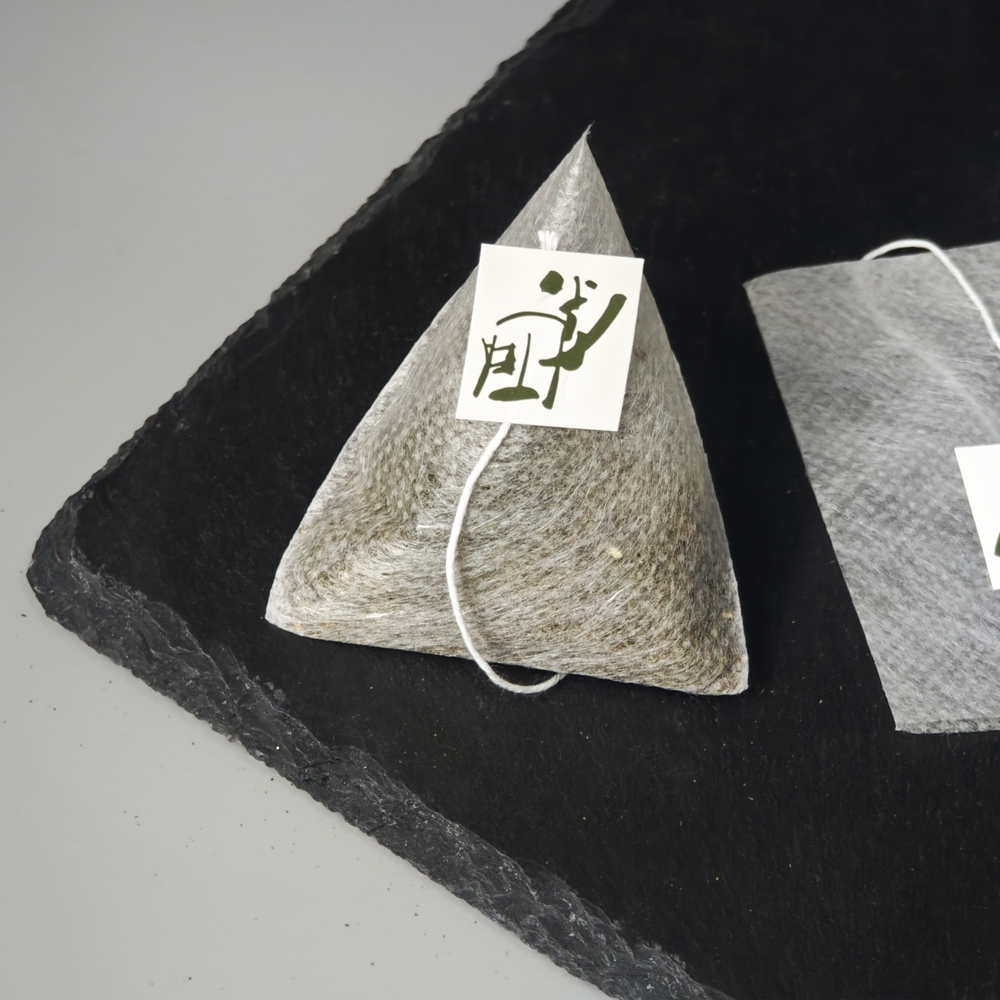
A3: A non woven tea bag uses a flat, paper-like filtration fabric produced by randomly laying and bonding fine polymer fibers, resulting in a double-chamber or single-chamber flat bag format. A woven mesh tea bag uses monofilament yarns woven into an open, transparent mesh, resulting in a three-dimensional pyramid or tetrahedral bag format. Non-woven bags are more economical and faster to produce; woven mesh bags offer premium visual presentation and whole-leaf brewing volume.
Q4: Can non woven tea bag fabric be customized for my brand?
A4: Yes. Non-woven fabric can be customized in terms of fabric weight (12–30 g/m²), pore size, roll width, core configuration, material composition (PP, PP/PE bicomponent, or PLA), pre-threading and pre-tagging, and custom flexographic or gravure printing with brand logos and patterns using food-grade inks.
Q5: What is the minimum order quantity and how long does production take?
A5: The MOQ is 6,000 pieces. The standard lead time is 15 to 20 days from order confirmation and artwork approval. Repeat orders with established specifications may qualify for shorter lead times based on production schedule availability.
Q6: Is non woven tea bag material biodegradable or compostable?
A6: Conventional polypropylene non-woven fabric is not biodegradable. However, PLA (polylactic acid) non-woven variants are industrially compostable and certified under EN 13432 and ASTM D6400. Brands targeting eco-conscious markets or operating under EU compostable packaging mandates should specify PLA non-woven material.
Q7: How should non woven tea bag rolls be stored?
A7: Non-woven PP fabric rolls should be stored in a clean, dry warehouse environment at temperatures between 15°C and 30°C and relative humidity between 40% and 65%. Rolls should remain sealed in their original moisture-barrier packaging until loaded onto the packaging line. Under proper storage conditions, shelf life is 24 to 36 months.
Q8: Do you provide samples before placing a bulk order?
A8: Yes. Free stock samples are available for evaluation. Custom samples produced to the buyer’s specifications (weight, width, material, printing) are typically available within 5 to 7 days. Sample shipping is handled via international express courier.
Comparison Table: Non-Woven vs. Woven Mesh Tea Bag Fabric
The following comparison provides a side-by-side evaluation of non-woven filter fabric versus woven monofilament mesh (nylon/PLA) across key procurement and performance criteria:
| Parameter | Non-Woven Tea Bag (PP/PLA) | Woven Mesh Tea Bag (Nylon/PLA) |
| Fabric Structure | Spunbonded random fiber web, thermally bonded | Woven monofilament warp-and-weft mesh |
| Material | Polypropylene (PP), PP/PE bicomponent, or PLA biopolymer | Polyamide (nylon PA-6/PA-6,6) or PLA monofilament |
| Bag Format | Flat double-chamber or single-chamber | Three-dimensional pyramid / tetrahedral |
| Fabric Weight (GSM) | 12 to 30 g/m² | 18 to 22 g/m² |
| Tensile Strength | 15 to 30 MPa | 35 to 75 MPa |
| Elongation at Break | 40% to 80% | 15% to 45% |
| Optical Appearance | Opaque / semi-translucent, paper-like | Transparent / high clarity, glass-like |
| Sealing Method | Thermal crimping (conventional heat jaws) | Ultrasonic welding (specialized horn and anvil) |
| Packaging Line Speed | 250 to 2,500 bags/min | 50 to 240 bags/min |
| Per-Unit Material Cost | Low (commodity polymer, high-volume process) | Moderate to high (precision weaving, lower throughput) |
| Infusion Speed | Rapid (high permeability, no air entrapment) | Moderate (may trap air bubbles initially) |
| Particle Retention | Excellent (tortuous filtration path) | Good (depends on mesh count/pore size) |
| Food-Contact Approval | FDA 21 CFR 177.1520; EU 10/2011 | FDA 21 CFR 177.1500 (PA); FDA 21 CFR 177.1630 (PLA) |
| Biodegradability | PP: Non-biodegradable; PLA: Industrially compostable | PA: Non-biodegradable; PLA: Industrially compostable |
| Typical Shelf Life | 24 to 36 months (ambient storage) | 12 to 60 months (varies by material) |
| Best-Suited Market Segment | Mass-market, private-label, food service, herbal tisanes | Premium specialty, whole-leaf, single-estate, gift teas |
Conclusion
The non woven tea bag remains the backbone of the global single-serve tea packaging industry for clear and compelling reasons. Its combination of low material cost, high-speed packaging line compatibility, reliable infusion performance, and decades-proven food-contact safety makes it the pragmatic, economically sound choice for the vast majority of commercial tea brands, private-label retailers, and contract packaging operations.
For procurement directors and packaging engineers evaluating filtration substrates, the non woven tea bag delivers unmatched value at scale. The material’s adaptability—available in a range of fabric weights, pore sizes, material compositions (including compostable PLA variants), and custom roll configurations—ensures that whether the application is a budget-friendly supermarket black tea, a fragrant herbal chamomile tisane, or a functional botanical wellness blend, a non-woven specification exists to meet the exact operational and branding requirements of the product.
With a minimum order quantity of 6,000 pieces and a standard lead time of 15 to 20 days, the format is accessible to mid-sized brands while scalable to the largest global tea conglomerates. The comprehensive certification portfolio—spanning FDA, EFSA, ISO 9001, ISO 22000, and compostability standards where applicable—provides the regulatory assurance that modern food packaging procurement demands.
As the beverage packaging landscape continues to evolve under sustainability mandates and consumer health scrutiny, non-woven filter fabric technology is advancing in parallel. The emergence of PLA biopolymer non-woven variants demonstrates that the format can meet the circular economy demands of the future without sacrificing the cost efficiency, line speed, and infusion quality that made it the industry standard in the first place.
For brands seeking a proven, versatile, and economically optimized tea filtration solution, the non woven tea bag is not merely a legacy format—it is a continuously improving, regulatory-ready, and commercially strategic packaging choice that will remain central to the global tea industry for years to come.
For quotations, custom specifications, sample requests, or further technical consultation, please contact the packaging materials sales team. All orders are subject to current production capacity and material availability. Specifications are subject to continuous improvement; buyers should request the latest technical data sheets with each order.
Post time: Aug-22-2026


