As the global coffee market continues to evolve, the demand for high-quality, eco-friendly brewing accessories has never been higher. For roasters, cafes, and packaging distributors, selecting the right filter paper is a critical decision that impacts not only the flavor profile of the cup but also the brand’s environmental footprint.
At Tonchant, we are dedicated to manufacturing and supplying premium coffee and tea filtration products, alongside sustainable packaging solutions. A question we frequently encounter from our international partners is: Which is better, bleached or unbleached coffee filter paper?
This comprehensive guide is designed to provide B2B buyers with an in-depth analysis of both options, covering materials, applications, advantages, and essential purchasing logistics.
1. Product Overview
Coffee filter paper is a specialized, permeable paper designed to trap coffee grounds and heavy oils while allowing liquid to flow through. The choice between bleached and unbleached filters is one of the most debated topics in the specialty coffee industry.
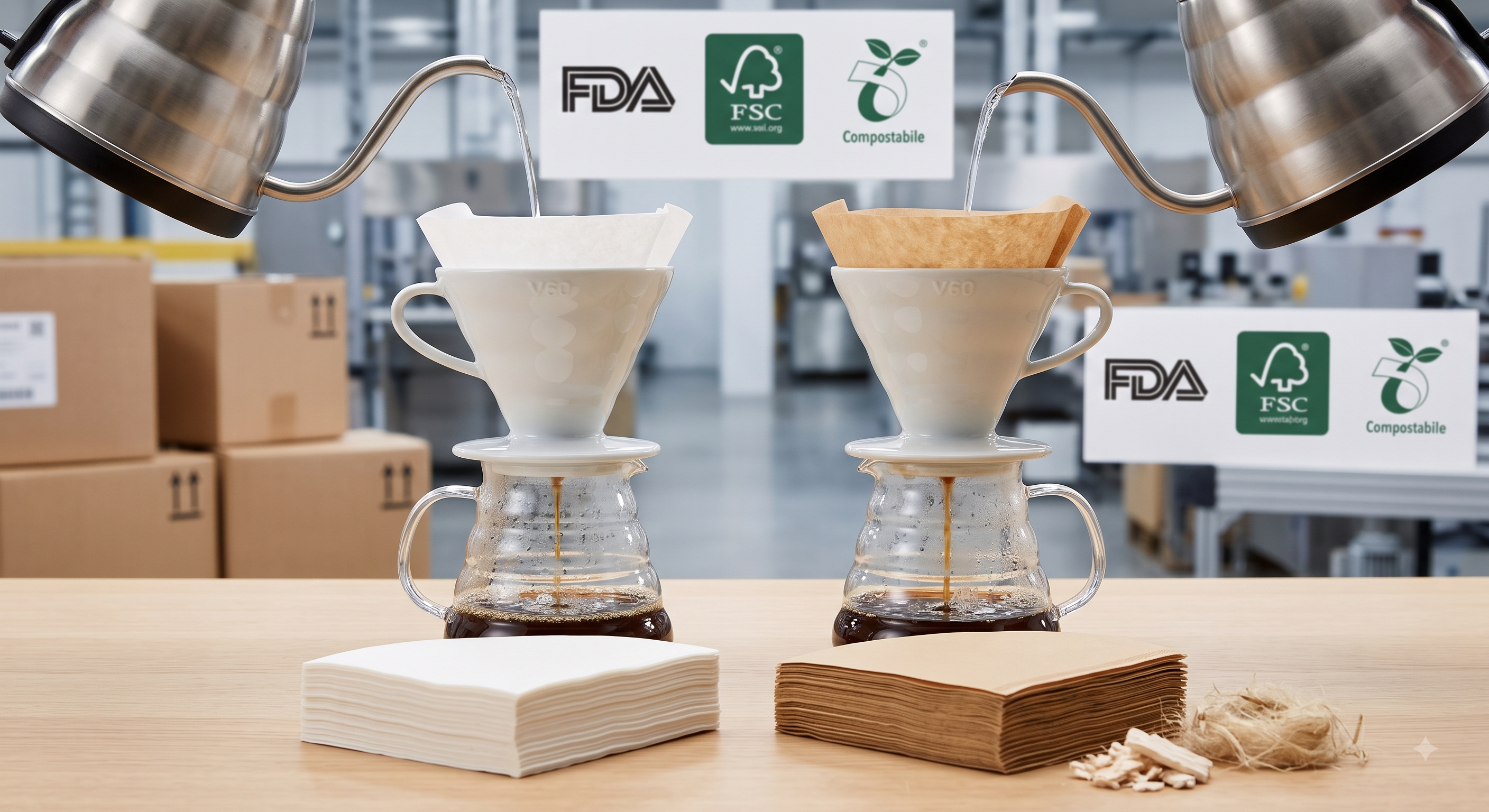
Bleached coffee filter paper is white. It has undergone a specific manufacturing process to remove the natural brown color of the wood pulp. In modern, high-quality manufacturing, this is achieved using safe, oxygen-based bleaching methods rather than harmful chemicals.
Unbleached coffee filter paper is natural brown. It bypasses the whitening process, retaining the original color of the wood pulp. Many consumers initially perceive unbleached paper as the more “natural” choice, but the reality of modern manufacturing makes the comparison much more nuanced.
Both types of paper are designed to perform the same fundamental task, but their differences in processing lead to distinct characteristics in flavor neutrality, aesthetics, and environmental impact.
2. Materials and Manufacturing Processes
Understanding the base materials and how they are processed is vital for making an informed purchasing decision.
Base Materials
High-quality coffee filters, whether bleached or unbleached, are typically made from a blend of virgin wood pulp and sometimes Abaca (Manila hemp) fibers. Abaca is highly valued for its exceptional tensile strength and porosity, which prevents the paper from tearing when wet while ensuring an optimal flow rate.
The Bleaching Process
The term “bleached” historically carried negative connotations due to the use of elemental chlorine, which could leave chemical residues and harm the environment. However, the industry has evolved. Today, premium bleached coffee filter paper is processed using one of two eco-friendly methods:
-
TCF (Totally Chlorine-Free): This method uses oxygen, hydrogen peroxide, or ozone to whiten the paper. It is the gold standard for specialty coffee filters, ensuring zero toxic runoff during manufacturing and absolutely no chemical residue in the final product.
-
ECF (Elemental Chlorine-Free): This method uses chlorine dioxide instead of elemental chlorine gas. While slightly less eco-friendly than TCF, it is still strictly regulated and entirely safe for food-contact applications.
The Unbleached Process
Unbleached paper is made from the exact same wood pulp but skips the oxidation/whitening stage. Because it is less processed, it retains lignin—a natural polymer found in plant cell walls. If not pre-rinsed properly by the end-user, this lignin can impart a woody or papery taste to the brewed coffee.
Both TCF bleached and unbleached papers align perfectly with a commitment to eco-friendly, biodegradable packaging materials.
3. Applications
Different brewing methods and product lines require specific filter characteristics.
-
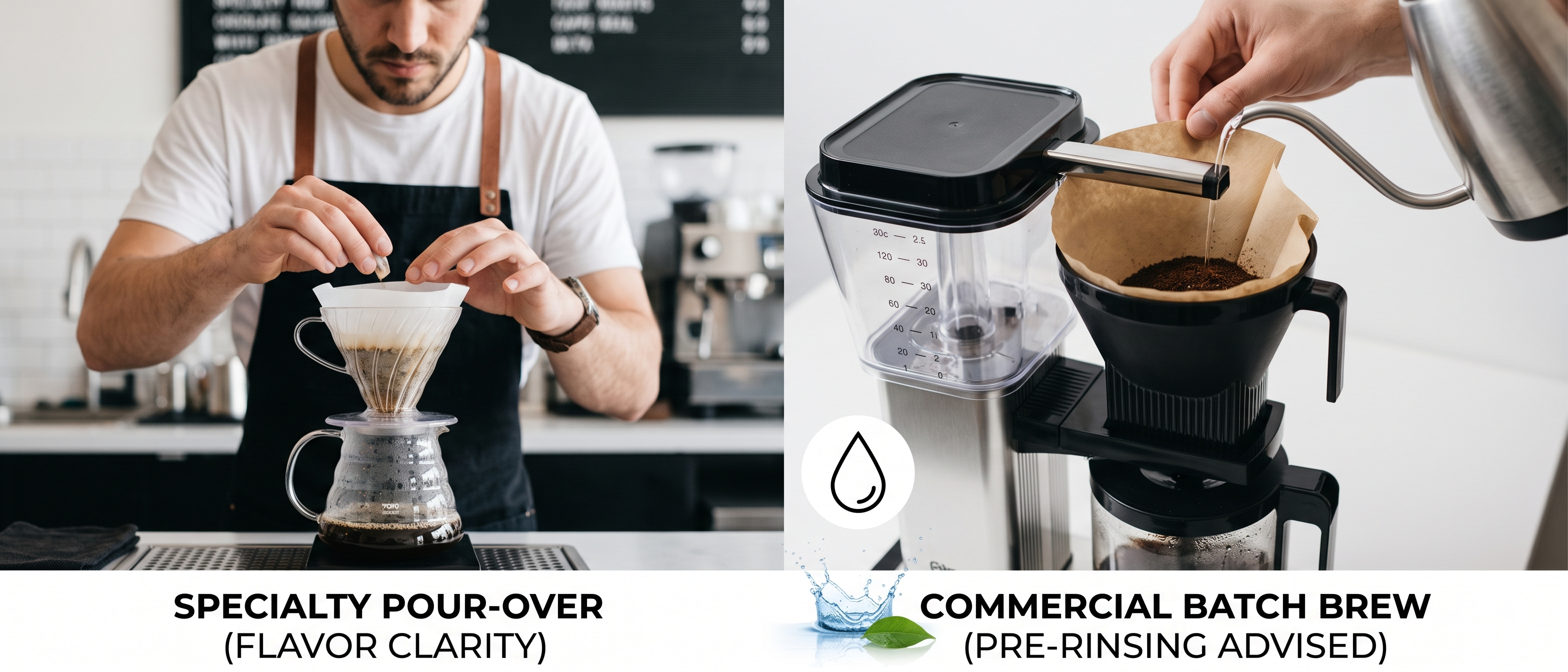
Pour-Over Cones & Baskets (V60, Chemex, Kalita): Specialty coffee shops strongly prefer bleached filters for pour-over methods because they guarantee flavor neutrality right out of the box, allowing the delicate floral and fruity notes of light-roast coffees to shine.
-
Custom UFO Drip Filter Bags: For on-the-go single-serve coffee, UFO drip filter bags are highly popular. Bleached paper is often preferred here because the end-user rarely has the opportunity to pre-rinse a single-serve drip bag before brewing.
-
Commercial Batch Brewers: High-volume cafes and diners often use large flat-bottom filters. Unbleached filters are sometimes chosen here for their rustic aesthetic and slightly lower cost at massive volumes.
-
Industrial Pods & K-Cups: Manufacturers sealing coffee into pods require filters with high wet-strength and rapid flow rates, often utilizing specialized bleached blends to maintain consistency.
4. Advantages: Head-to-Head
Advantages of Bleached Coffee Filter Paper
-
Zero Flavor Interference: The most significant advantage of oxygen-bleached paper is that it imparts absolutely no “papery” taste to the coffee, even if the user forgets to pre-rinse it.
-
Superior Aesthetic: The stark white paper provides a beautiful visual contrast against the dark coffee grounds, which is highly appealing in third-wave coffee shops and retail packaging.
-
Consistent Flow Rate: The oxidation process breaks down certain micro-fibers, often resulting in a slightly more consistent and predictable drawdown time during brewing.
Advantages of Unbleached Coffee Filter Paper
-
Rustic, Organic Look: The natural brown color visually communicates an “earthy” and organic vibe, which aligns well with certain brand identities.
-
Slightly Less Processing: Skipping the bleaching step means less energy and water are consumed during manufacturing.
-
Cost-Effectiveness: In massive, industrial quantities, unbleached paper can sometimes carry a slightly lower raw material cost.
5. Comparison Table
| Feature | Bleached Coffee Filter Paper (TCF) | Unbleached Coffee Filter Paper |
|---|---|---|
| Color | Bright White | Natural Brown |
| Processing | Oxygen-treated (No chlorine) | Minimal processing |
| Flavor Neutrality | Excellent (No papery taste) | Good (Pre-rinsing highly recommended) |
| Environmental Impact | Highly sustainable, compostable | Highly sustainable, compostable |
| Visual Appeal | Clean, modern, high contrast | Rustic, organic, natural |
| Best For | Light/Medium roasts, UFO drip bags, cafes | Dark roasts, brands with rustic aesthetics |
| Pre-Rinsing Required? | Optional / Unnecessary | Strongly Recommended |
6. Customization Options for B2B Buyers
As an export buyer or brand owner, differentiating your product in the market is crucial. We offer extensive customization for filtration products:
-
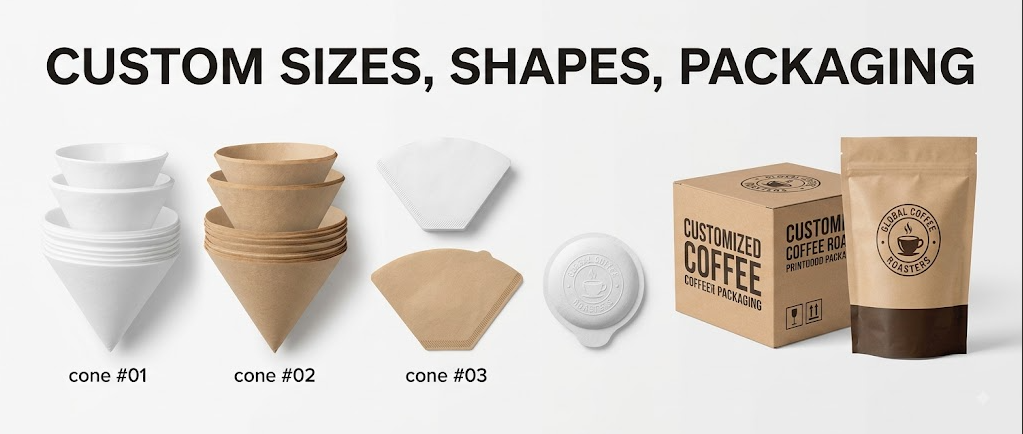
Shape & Size: We manufacture precision die-cut filters for all standard brewers (Sizes 01, 02, 03), flat-bottom baskets, and specialty shapes like the UFO drip filter bag.
-
Retail Packaging Integration: How the filters are packed matters just as much as the filters themselves. For retail, we can supply standard polybags, or for a more premium, sustainable approach, we can package filters in custom printed boxes or pouches.
-
Advanced Material Pairing: If you are sourcing filters alongside coffee beans, consider the outer packaging. Pairing your coffee products with high-barrier, recyclable materials—such as understanding the benefits of EVOH+PE versus MDOPE+PE—ensures maximum freshness while maintaining a fully recyclable, eco-friendly product lifecycle. Whether you need 12 oz side-gusset bags for whole beans or 250g stand-up pouches, coordinating your filter and bag purchases streamlines your supply chain.
-
Branding: Custom embossed logos on the filter edge, or bespoke OEM/ODM retail box designs printed with food-safe, soy-based inks.
7. MOQ (Minimum Order Quantity)
For commercial buyers, MOQs depend heavily on the level of customization required:
-
Standard Blank Filters: For unbranded, standard-size filters (bleached or unbleached), the MOQ is typically low, starting around 10,000 to 50,000 pieces, making trial orders highly accessible.
-
Custom Shapes / OEM Packaging: For bespoke shapes (like custom UFO drip filters) or custom-printed retail boxes, MOQs generally start at 100,000 to 200,000 pieces to absorb the setup costs of die-cutting and printing plates.
8. Lead Time and Logistics
In international trade, accurate lead times and efficient shipping are the backbone of a successful partnership.
-
Production Lead Time: Standard orders typically require 10–15 days for production. Custom OEM orders (including bespoke packaging) generally take 20–30 days from the final approval of the digital proofs.
-
Shipping & Logistics: Coffee filters are lightweight but high-volume (volumetric weight). For large-scale distributors, we highly recommend consolidating shipments into full container loads (FCL). A 40HQ container offers the best economy of scale, drastically reducing the per-unit ocean freight rates compared to LCL (Less than Container Load) shipments. Our export sales team manages all shipping documents, ensuring smooth customs clearance at your destination port.
(Note: Ask your account manager about seasonal volume discounts; we occasionally offer incentives, such as a 1000 USD discount on full container orders, to help offset ocean freight costs during peak seasons.)
9. Certificates and Quality Assurance
When importing food-contact materials, strict compliance with global safety standards is non-negotiable. Our bleached and unbleached coffee filter papers are backed by comprehensive certifications:
-
FDA / LFGB: Fully certified for food contact safety in the United States and European markets.
-
FSC (Forest Stewardship Council): Ensuring that the wood pulp is sourced from responsibly managed forests.
-
Compostability: Certified under EN 13432 and OK Compost standards, guaranteeing that the filters (both bleached and unbleached) are 100% biodegradable and industrially compostable.
-
ISO 9001: Manufactured in state-of-the-art facilities with strict quality control to ensure consistent thickness, porosity, and seam integrity.
10. Frequently Asked Questions (FAQ)
Q: Does bleached coffee filter paper taste or smell like bleach?
A: Absolutely not. Premium bleached filters are treated using Oxygen (TCF), not chlorine. They are completely odorless, tasteless, and leave zero chemical residue, making them the preferred choice for specialty coffee tasting.
Q: Are unbleached filters better for the environment?
A: They are slightly less processed, which saves a small amount of water and energy. However, modern TCF bleached filters are also highly eco-friendly, fully biodegradable, and do not release harmful toxins into the environment. Both are excellent sustainable choices.
Q: Why do I need to rinse unbleached filters before brewing?
A: Unbleached paper retains natural wood lignins. If you pour hot water through an unrinsed unbleached filter and taste the water, it will taste like wet cardboard. Rinsing the filter with hot water before adding coffee grounds washes away this woody taste and pre-heats your brewing vessel.
Q: Can you manufacture custom drip bags for our brand?
A: Yes, we specialize in OEM/ODM projects, including standard drip bags, UFO drip filter bags, and the accompanying outer foil or recyclable envelopes to keep the coffee fresh.
Q: How should I store coffee filters in bulk?
A: Paper readily absorbs moisture and ambient odors. Keep bulk filters stored in their original sealed packaging, in a cool, dry place away from strong-smelling items like spices, cleaning supplies, or even strongly roasted coffee, until ready for retail distribution or use.
11. Conclusion
The debate between bleached and unbleached coffee filter paper ultimately comes down to workflow and brand positioning.
If your clients demand absolute flavor clarity, convenience (no pre-rinsing), and a clean, modern aesthetic, bleached coffee filter paper (TCF) is the undeniable winner. It is the industry standard for specialty cafes and premium single-serve products like UFO drip bags.
Conversely, if your brand identity is built around rustic, minimally processed aesthetics and your end-users are educated on the necessity of pre-rinsing, unbleached paper is a fantastic, sustainable option.
At Tonchant, we excel in providing both solutions, crafted from sustainable materials and manufactured to exacting standards. Whether you are looking to fill a 40HQ container with standard V60 filters or develop a custom filtration project, our team is ready to deliver eco-friendly packaging solutions that elevate the coffee experience.
Post time: Aug-11-2026


