The commercial coffee sector is undergoing a massive operational shift. Consumers now demand the nuanced, delicate flavor profiles of specialty pour-over coffee, but they refuse to sacrifice the speed and convenience historically associated with instant coffee or automated pods. For food service operators, distributors, and wholesale buyers, bridging this gap between craft quality and high-speed convenience is a primary operational challenge.
Enter the single-serve drip coffee bag. This packaging format has transitioned from an overseas novelty into a core revenue driver for global hospitality and retail brands. However, navigating the procurement of flexible coffee packaging involves complex decisions regarding material science, barrier properties, supply chain logistics, and printing technology.
To streamline your sourcing strategy, we have compiled this comprehensive guide and essential drip coffee FAQ to address the most critical questions procurement teams face when adopting this packaging format.
? What Is It?
A drip coffee bag is a self-contained, single-use brewing system engineered to deliver a fresh pour-over coffee experience without requiring specialized hardware like gooseneck kettles, scales, or ceramic drippers.
The system relies on a two-part packaging architecture:
A food-safe, micro-porous pouch—typically made from non-woven synthetic fabrics (PP/PET) or compostable Polylactic Acid (PLA) corn fiber. It is pre-dosed with 8 to 15 grams of precision-ground coffee. Attached to the sides of this pouch are rigid paper “ears” or a circular 360-degree ring that anchors the filter to the rim of a standard mug.
An airtight, protective envelope that houses the inner filter. Because ground coffee oxidizes rapidly, this outer sachet is constructed from high-barrier materials (such as aluminum foil laminates or EVOH-coated recyclable plastics) and flushed with nitrogen gas during the sealing process to lock in freshness.
The consumer simply tears open the sachet, anchors the inner filter to their cup, and pours near-boiling water over the grounds, replicating a traditional barista pour-over in under two minutes.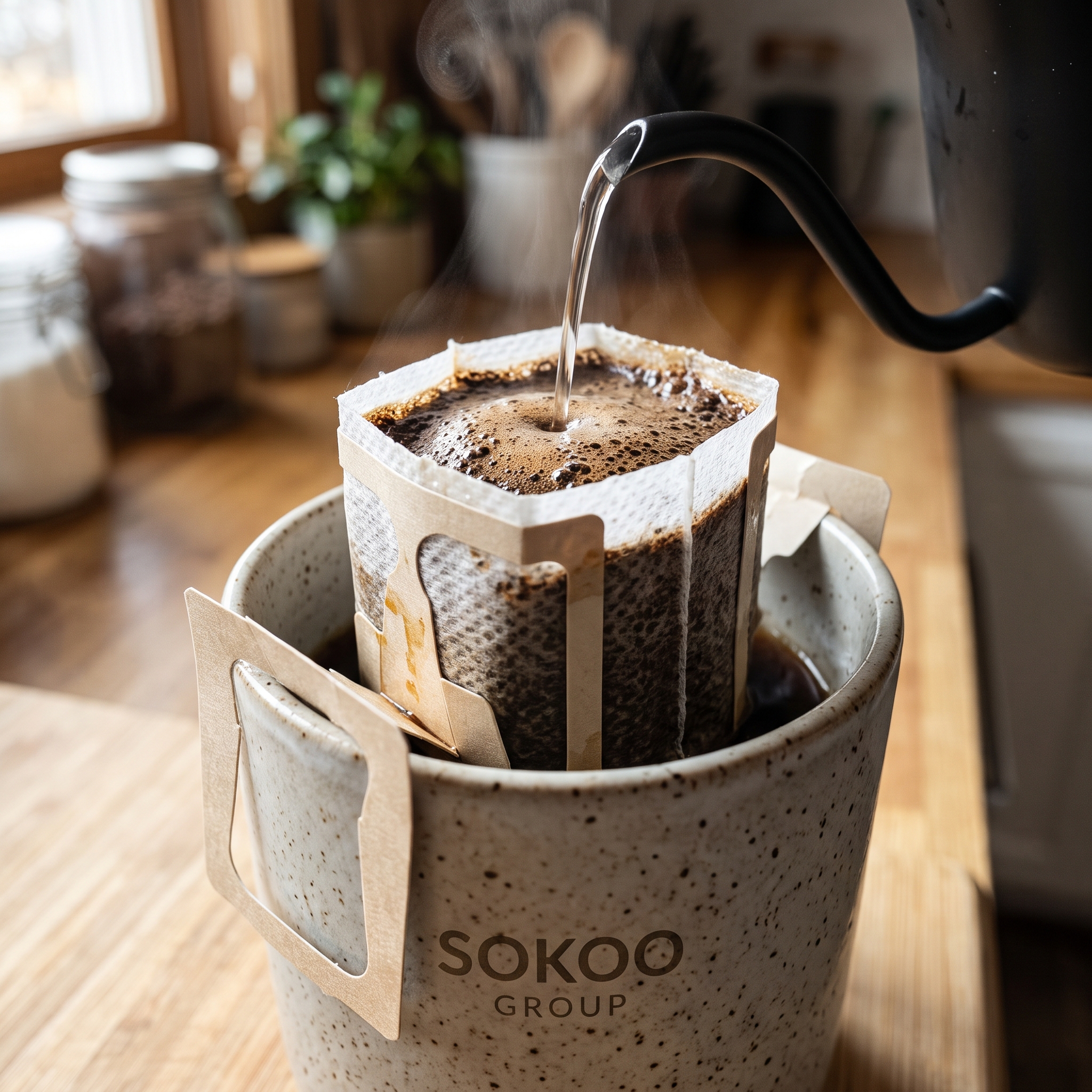
Key Benefits
1. Zero Equipment Investment
Unlike K-Cups or Nespresso capsules, drip bags require nothing more than hot water and a cup. This democratizes specialty coffee for travelers and office workers.
2. Premium Profit Margins
Single-serve packaging commands a higher price per gram. Transitioning bulk coffee into sachets increases overall yield and retail margin.
3. Extended Shelf Life
Nitrogen ($N_2$) flushing brings oxygen levels below 1%, preserving aromatic compounds for a retail-ready shelf life of 12 to 18 months.
4. Reduced Shipping Waste
Flexible sachets pack flat, maximizing pallet density and significantly reducing outbound freight costs compared to rigid pods.
Applications
Restaurant Chains and QSRs
A foolproof, zero-maintenance alternative to expensive espresso machines. Sell customized retail boxes at point-of-sale.
Food Delivery Companies
Eliminate transit degradation. Deliver a sealed bag and cup; the consumer brews fresh hot water at home.
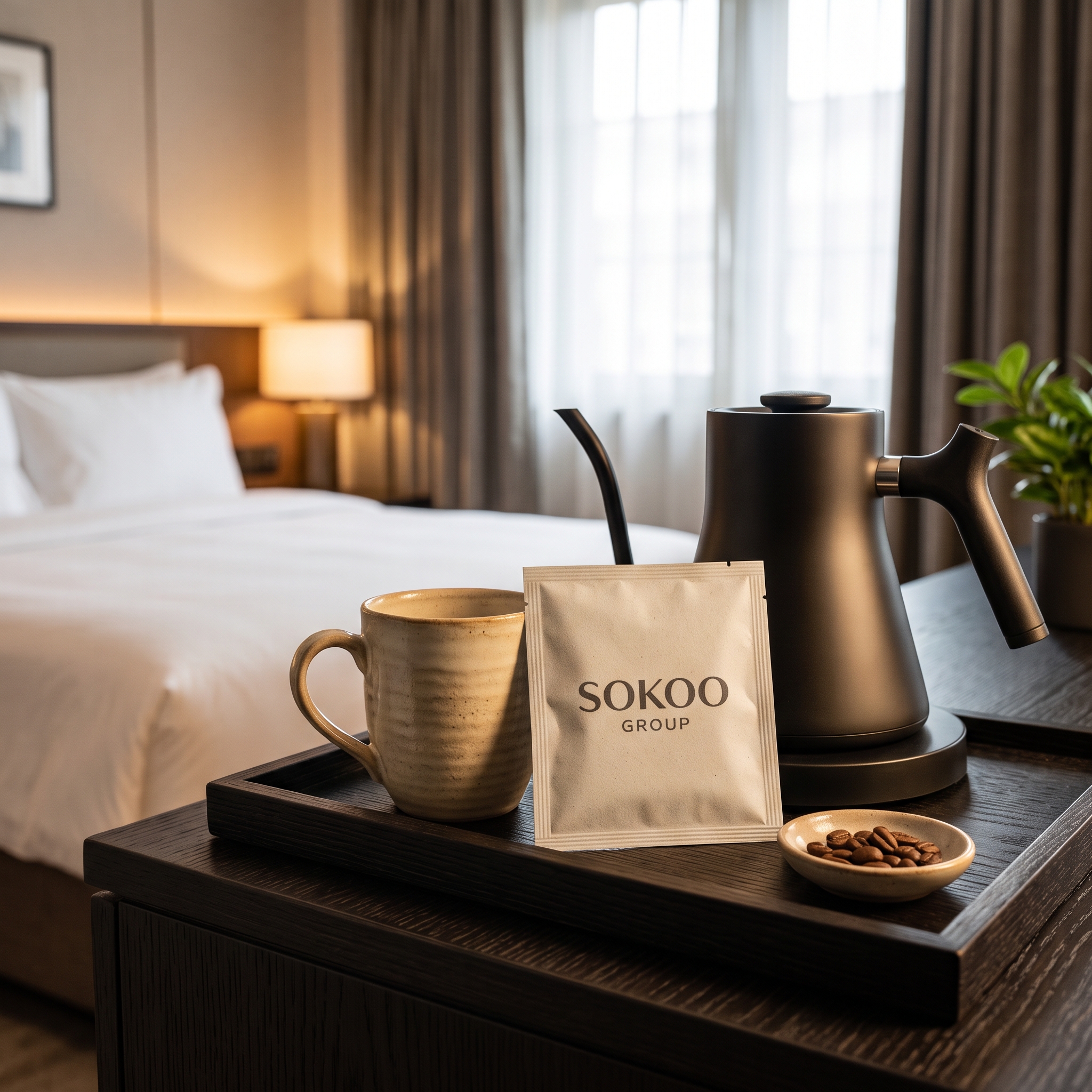
Luxury Hospitality
Replace unhygienic pod machines with branded sachets, elevating the experience and reducing labor.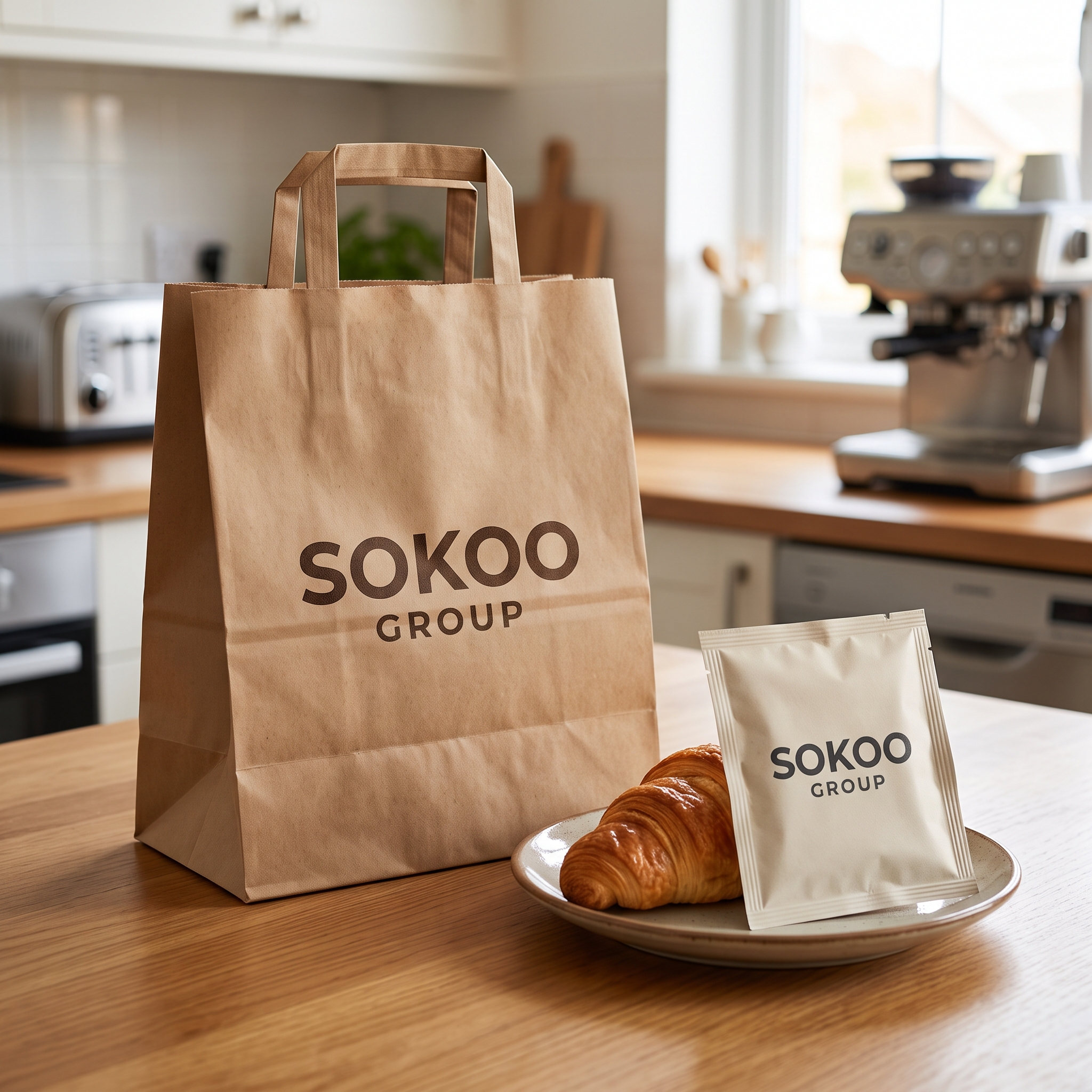
Wholesalers and Subscriptions
Slim profiles fit into standard mailer boxes, keeping shipping weights low for D2C coffee clubs.
Buying Guide
1. Determining Minimum Order Quantities (MOQ)
- •Blank Stock (Self-Packing): MOQs 5,000 to 10,000 units. Best for small roasters.
- •Digital Printing: Custom sachets with MOQs around 10,000 units. Ideal for testing new markets.
- •Rotogravure Printing: MOQs 50,000+ units. Lowest unit cost for mass distribution.
2. Logistics and Volumetric Freight
Critical Tip: Always calculate freight based on dimensional weight (Length x Width x Height / 5000). Relying on dead weight will result in under-budgeting shipping expenses.
3. Material Selection: Non-Woven vs. PLA
Non-Woven (PP/PET): Cost-effective industry standard. Reliable extraction but petroleum-based.
PLA (Polylactic Acid): 100% plant-based bio-mesh. Industrially compostable. Choice for ESG-focused brands.
Common Buyer Concerns
Customization and Graphic Design Handoffs
We recommend using Adobe Illustrator (not Figma) for artwork submission to preserve CMYK accuracy and vector die-line integrity, preventing costly pre-press delays.
Certifications and Food Safety
Ensure suppliers hold FDA 21 CFR 177 or EU 10/2011 compliance. Facilities should be BRCGS or ISO 22000 certified to guarantee safety under high-heat brewing.
OEM Turnkey vs. In-House Co-Packing
Operating nitrogen-flushing equipment requires specialized engineering. For most, utilizing a turnkey OEM service—where a partner like Sokoo Group handles all technical aspects—is more cost-effective.
Comparison Table: Supply Chain Strategies
| Strategy | Capital Required | Control Over Roast | Best Suited For | Typical MOQ |
|---|---|---|---|---|
| Manual / Semi-Auto In-House | Low ($1,500 – $5,000) | Complete | Micro-roasters | 5,000 |
| Fully Auto In-House Machinery | High ($30,000 – $80,000) | Complete | Large commercial roasteries | N/A |
| Turnkey OEM / Co-Packing | Low (Inventory Only) | High | Distributors, Chains | 10,000 – 50,000+ |
Essential Drip Coffee FAQ
1. How many grams of coffee can a standard drip bag hold?
Standard filters (70mm x 90mm) hold 8-12g. Custom oversized or circular UFO-style filters can accommodate up to 15g for larger Western-style mugs.
2. Does the compostable PLA material affect the flavor?
No. PLA corn fiber is flavor-neutral and odorless. It provides a cleaner extraction than bleached paper, allowing natural oils and delicate notes to shine.
3. Ultrasonic sealing vs. thermal heat sealing?
Ultrasonic sealing (for inner filters) uses vibrations to fuse fabric without glues or heat, ensuring no foreign odors. Thermal sealing is used for the outer airtight sachet.
4. Can outer sachets be recyclable or compostable?
Yes. Options include Recyclable Mono-Materials (MDO-PE) or fully compostable laminates using Kraft paper and NatureFlex™ cellulose.
5. How do I ensure nitrogen flushing is working?
Ask for headspace oxygen analyzer test results. To guarantee an 18-month shelf life, residual oxygen must consistently fall below 1%.
Conclusion
Transitioning to or expanding a single-serve coffee program is a major operational milestone. By leveraging the low barrier to entry and high profit margins of drip coffee bags, distributors, restaurant chains, and food delivery networks can tap into the booming specialty coffee market without heavy investments in brewing hardware or barista training.
Success in this category requires rigorous attention to material safety, accurate logistics planning, and high-fidelity brand design. By prioritizing certified food-safe materials and partnering with experienced global packaging experts like Sokoo Group, B2B buyers can confidently build scalable, premium coffee programs.
Post time: Oct-06-2026


