In the commercial coffee industry, roasters and coffee shop owners invest heavily in sourcing high-quality green beans, carefully adjusting roasting profiles, and optimizing water quality. However, the final and most crucial physical barrier between ground coffee and the coffee in the consumer’s cup is the filter paper. The physical and chemical properties of this semi-permeable membrane determine the extraction kinetics, oil retention, and the clarity of the final beverage’s flavor.
Choosing the right filter paper is a strategic decision. Sourcing from a professional coffee filter paper supplier ensures your brand’s intended flavor is consistently delivered in thousands of extractions every day. This guide provides a comprehensive analysis of how various factors related to filter paper affect coffee flavor and details key sourcing metrics that B2B buyers should focus on.
Product Overview: The Principle of Paper Filtration
Coffee filter paper is an engineered cellulose membrane designed to perform complex extraction and separation processes during hot water extraction. Unlike metal or nylon mesh filters, filter paper effectively traps tiny particles and chemicals.
Filter paper affects taste through three main mechanisms:
Particle retention rate (clarity)
High-quality filter paper effectively retains insoluble coffee fines (particles smaller than 100 microns). By removing suspended solids, filter paper allows the coffee flavor to be purer, fully revealing delicate acidity and floral aromas without creating a cloudy taste.
Lipid adsorption (body)
Coffee contains natural oils and diterpenoids (especially cafestol and coffee bean alcohol). Cellulose fibers can naturally adsorb these lipids. While this reduces the body and viscosity of the coffee, it also prevents the oils from masking the subtle flavors of the coffee’s origin and significantly reduces the bitterness caused by oxidized lipids.
Flow rate regulation (extraction kinetics)
The porosity of the filter paper creates hydraulic resistance, which in turn determines the extraction time (the contact time between water and coffee grounds). If the filter paper drains too quickly, the coffee will be under-extracted, resulting in a sour and weak taste. If the filter paper is clogged and drains too slowly, it will lead to over-extraction, resulting in a bitter and astringent coffee.
Materials: Fiber matrix and flavor chemistry
The plant-based components of paper and the processing methods of raw materials directly determine the paper’s performance and flavor neutrality.
Native softwood pulp
Standard high-quality filters are made from 100% virgin softwood pulp. The long fibers of the coniferous tree give the filter structural integrity and basic porosity. Due to the risks of chemical contamination, odor, and poor wet strength, recycled pulp is strictly prohibited in high-end filtration products.
Manila hemp (banana fiber)
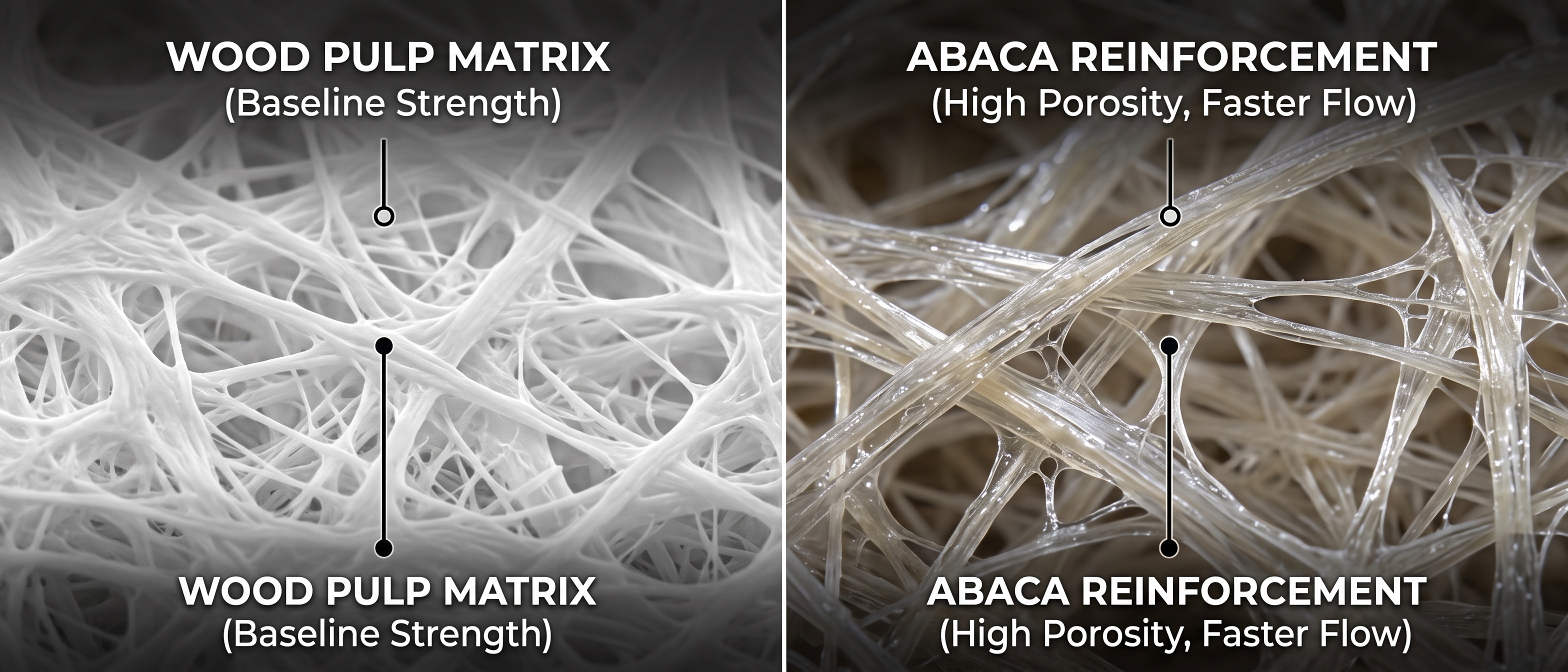
High-quality coffee filters typically contain up to 30% abaca fiber, derived from the petioles of a banana variety native to the Philippines. Abaca fibers have an extremely high aspect ratio (long and thin), forming a highly porous and exceptionally strong mesh structure. Abaca significantly enhances coffee flavor. It ensures a fast and stable flow of coffee grounds while preventing fine particles from passing through. Baristas can grind coffee more finely, thus increasing extraction rates (resulting in sweeter, more complex flavors) without worrying about filter clogging interrupting the extraction process.
Bleaching process and flavor contamination
The bleaching process of the fruit pulp is a major point of contention affecting its flavor.
TCF (Completely Chlorine-Free) Bleached Paper
This is the gold standard for specialty coffee. This paper is treated with oxygen, hydrogen peroxide, or ozone. This process completely removes plant lignin (which imparts a woody flavor) without leaving any chemical residue or odor. Even omitting the pre-wetting rinse step, TCF paper will not impart any flavor to the coffee.
Unbleached (natural/kraft paper) filter paper
This type of filter paper is not bleached, retaining its natural lignins. If you brew dry unbleached filter paper directly with hot water, the hot water will often extract these lignins, giving the coffee a noticeable “wet cardboard” or papery taste. Although unbleached filter paper is favored for its rustic appearance, it must be thoroughly rinsed with boiling water before brewing to remove its flavor.
Application: Matching filter specifications to brewing methods
Different brewing processes require specific paper properties to achieve the best flavor.
Specialized pour-over coffee makers (conical and flat-bottomed)
In manual pour-over coffee (such as V60, Chemex, Kalita), gravity is the primary driving force.
Flavor objectives: high transparency, bright acidity, and distinct terroir.
Filtration requirements: Medium-weight filter paper (45 to 55 g/m²), precisely blended from wood pulp and abaca. The filter paper surface must have a specific crease structure to trap fine particles on the sidewalls, rather than allowing them to settle at the bottom and clog the water flow.
Single-serve drip coffee bag (UFO coffee bag)
These suspended ear bags are either directly immersed in the cup or suspended above it, relying on rapid capillary action and requiring no support from a rigid brewing device.
Flavor objective: Rapid and balanced extraction, avoiding over-soaking.
Filtration requirements: Ultralightweight nonwoven composite material (22 to 32 g/m²). This material must have good flowability to prevent filter bag overflow; therefore, synthetic bicomponent fibers or polylactic acid (PLA) blends are required to provide maximum air permeability while maintaining strength.
Commercial batch brewing machines
A large-capacity coffee machine pours several liters of water into large pieces of coffee grounds to brew the coffee.
Flavor objective: Consistent taste, balanced sweetness, and full-bodied.
Filtration requirements: High-grammage filter paper (70 to 90+ g/m²). The filter paper must be able to withstand the immense hydrostatic pressure of wet coffee grounds and water without breaking. Lower flow rates are acceptable due to the coarser grind and longer programmed brewing cycles used in batch brewers.
Advantages of purchasing high-quality filter media
Partnering with a professional, industrial-scale coffee filter supplier can bring operational and sensory advantages, which can directly impact profits.
Absolutely flavor-neutral
High-end suppliers guarantee sensory neutrality through rigorous laboratory testing, ensuring that aromatic amines or volatile organic compounds (VOCs) will not be transferred into the beverage.
Extraction Consistency
Strict production tolerance control, including grammage (per square meter) and thickness, ensures that the extraction rate of each filter paper is completely consistent. This allows bakers to print highly accurate brewing recipes on retail packaging bags because they know the filter paper’s performance is consistently excellent.
Exceptional wet burst strength
Premium filter paper uses mechanical fiber entanglement and ultrasonic welding processes, rather than chemical adhesives. This ensures the filter paper will not break under pressure, preventing catastrophic bursts that could ruin commercial batches of coffee and waste expensive brews.
Reduced stagnation
Advanced pressing technology maximizes the functional surface area, forming microcapsules that capture fine powders and keep the main flow channels open, thus achieving a clean and sweet extraction.
Comparison Table: Filter Paper Grades and Their Impact on Flavor
Customization options for brand owners
B2B buyers require integration of filter media with their retail brands. Established suppliers can provide comprehensive customization services throughout the entire product line.
Precision die-cutting
Manufacturing a variety of custom shapes, from classic trapezoids and cones to special ice cream sieves for espresso extraction and custom UFO drip filter bags.
Crinkling process
The creping process (creating micro-wrinkles on the paper surface) can be customized. Deep double-sided creping maintains a certain distance between the paper and the brewer wall, allowing air to escape and water to flow quickly. Flat or single-sided creped paper adheres to the brewer wall, slowing the water flow and thus increasing the body and sweetness of dark roast coffee.
Retail Packaging
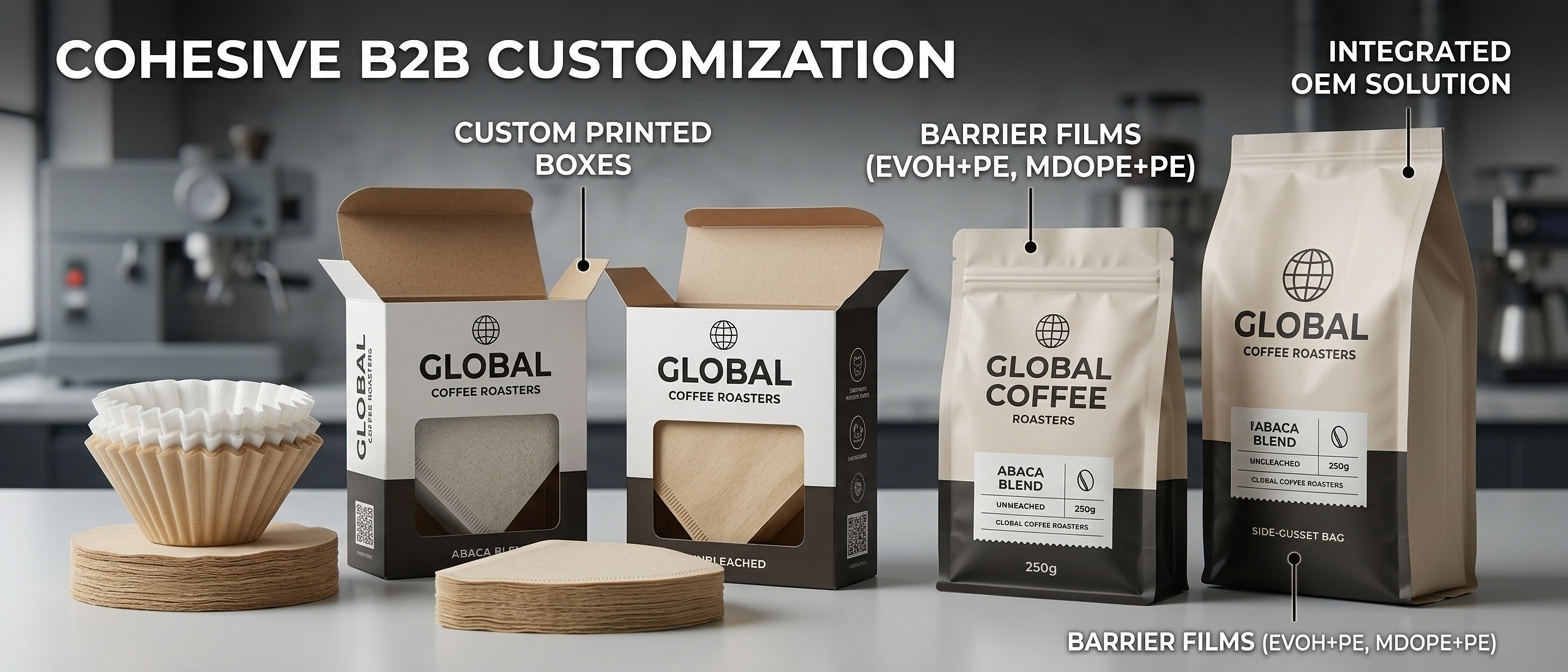
We offer a full range of OEM services, including custom-printed kraft paper boxes, plastic bags, or nitrogen-filled high-barrier aluminum foil bags (such as EVOH+PE) to protect paper from ambient humidity and warehouse odors before retail.
Minimum Order Quantity (MOQ)
The minimum purchase quantity is set based on the degree of customization and the scale of the papermaking process.
Standard retail specifications
For the off-the-shelf size (V60 size 01/02, standard basket filter), it is packaged in blank or simple custom packaging boxes, with a minimum order quantity typically ranging from 10,000 to 50,000 retail packages.
Customized papermaking
If a customer requires a specific grammage (GSM) or a specific abaca blend ratio, customized papermaking is necessary. This requires pre-ordering a batch of master rolls, typically with a minimum order quantity of 1.5 to 3 metric tons of base paper, and is suitable for large contract manufacturers.
Automated rolls
For customers using automated forming-filling-sealing machines to produce single drip bags, the minimum order quantity is calculated in linear meters of roll material, typically from 50 to 100 rolls.
Delivery time and global logistics
A predictable supply chain is crucial to preventing baking operations from shutting down due to raw material shortages.
Production cycle
Standard unprinted orders or regular inventory can be shipped within 10 to 15 business days. Custom OEM packaging or special die-cutting typically takes 25 to 35 business days after final artwork confirmation.
Container optimization
Filter paper accounts for a large volume percentage. Less-than-container-load (LCL) shipping makes filter paper susceptible to moisture damage and results in higher volumetric weight costs. The procurement strategy should prioritize full container load (40-foot high cube) shipping to maximize volume and significantly reduce unit landed costs.
Moisture Protection
During international sea transport, paper is subject to fluctuations in humidity and temperature. Professional suppliers use high-strength polyethylene stretch film, internal desiccant, and barrier padding to ensure that the paper arrives at its destination completely dry and odorless.
Certificates and food contact compliance
Because filter paper operates at temperatures close to boiling point (90°C–96°C) and comes into direct contact with drinkable beverages, stringent regulatory compliance is non-negotiable.
FDA 21 CFR 176.170 / 176.180
This certifies that the paper and any of its mechanical processing are completely safe for use in contact with water and oily foods and will not produce harmful extracts under high temperature conditions.
LFGB (European Standard)
Ensures products pass rigorous German and EU sensory tests, verifying zero transfer of lead, cadmium, primary aromatic amines, or odors.
FSC (Forest Stewardship Council)
Ensuring that virgin wood pulp is sourced from responsibly managed, deforestation-free forests is increasingly becoming a mandatory requirement for brands targeting the European market.
Compostability (EN 13432 / OK compost)
Verifies that natural cellulose fibers can be safely biodegraded in commercial composting facilities without leaving microplastic residues, supporting circular economy initiatives.
Frequently Asked Questions (FAQ)
Is the thickness of the filter paper directly proportional to the flow rate?
This is not always the case. While a higher grammage usually means a denser paper, the flowability of paper depends heavily on the fiber type (aba jute versus wood pulp) and the degree of surface wrinkling. A sheet of 50 g/m² paper with deep wrinkling on both sides will generally flow much better than a sheet of 45 g/m² paper, because the wrinkling prevents tiny paper scraps from completely clogging the paper’s pores.
How can I prevent unbleached filter paper from making my coffee taste like cardboard?
Unbleached filter paper needs to be thoroughly pre-washed. Place the empty filter paper in the coffee maker and pour in 100 to 150 ml of boiling water, ensuring the filter paper is completely soaked. Discard the pre-wash water before adding coffee grounds. This removes soluble lignin that causes a papery smell.
Why does my coffee, brewed with lightly roasted coffee beans, still taste bitter?
If your grinder produces a lot of fine coffee grounds, these particles will settle at the bottom of the filter paper, clogging its pores (a phenomenon known as “clogging”). When the filter paper is clogged, water accumulates, significantly increasing extraction time. This prolonged contact time extracts bitter tannins and heavier compounds. Upgrading to a filter paper with a higher abacus content and better pleats can trap the fine particles on the filter paper walls, preventing bottom clogging and restoring the coffee’s sweetness.
Do paper filter cartridges expire?
Paper itself doesn’t expire like paper in a biological sense, but it is highly hygroscopic (it absorbs moisture) and absorbs odors. If filter paper is stored in a damp warehouse or with strongly scented items (such as spices, chemicals, or even strongly flavored roasted coffee), it will absorb these odors and transfer them into the brewed coffee. Therefore, filter paper should always be stored in a sealed barrier bag in an environment with controlled temperature and humidity.
Strategic sourcing achieves exceptional flavor
In commercial coffee production, treating filter paper as a mere commodity is a serious mistake. Filter paper plays an active role in the chemical extraction process, directly influencing the acidity, body, and clarity of the final product.
By understanding the interplay between grammage, fiber composition, and pleat structure, the sourcing team can select filter media that effectively enhance the flavor of a roast. Partnering with a professional, certified coffee filter supplier ensures that the integrity, purity, and intended flavor of the coffee remain consistent throughout the entire process, from the roasting facility to the consumer’s cup.
Post time: Sep-30-2026


