The global commercial tea sector is experiencing a clear structural division. On one end, commercial food service, hospitality, and mass-market grocery segments demand high-volume efficiency, cost control, and rapid infusion. On the other, the premium specialty retail, boutique botanical, and direct-to-consumer (DTC) segments prioritize whole-leaf visual presentation, complex extraction dynamics, and sustainable packaging narratives.
At the center of this product development strategy sits a fundamental engineering decision: pyramid tea bags versus traditional flat tea bags.
For brand owners, contract manufacturers, packaging distributors, and international procurement managers, choosing between these two formats impacts far more than aesthetic shelf presence. It dictates factory-floor capital expenditure (CapEx), continuous operational expenditure (OpEx), packaging line speed, ingredient cut-size specifications, raw material sourcing, secondary barrier pouch sizing, freight density, and margin profile.
This guide provides an objective, data-driven technical analysis comparing pyramid tea bags and flat tea bags across infusion physics, converting machinery, packaging substrates, supply chain economics, and sustainability profiles.
Quick Comparison Table
| Metric / Parameter | Pyramid Tea Bags (Tetrahedral Form) | Flat Tea Bags (Single or Double Chamber) |
| Primary Geometry | Three-dimensional tetrahedron | Two-dimensional planar (square, rectangle, round) |
| Volumetric Expansion | High (~40–55% free internal expansion volume) | Low to moderate (~15–25% internal volume) |
| Compatible Tea Grades | Full-leaf (OP, FOP), coarse herbs, fruit tisanes, pearls | Dust, fannings (BOPF), fine cut botanicals (TBC) |
| Dominant Materials | Woven/non-woven PLA (corn starch), woven nylon, PET | Wood pulp, unbleached abacá hemp, cellulose blends |
| Typical Sealing Method | High-frequency ultrasonic weld bonding | Thermal heat-seal, mechanical fold/crimp, or staple |
| Infusion Extraction Rate | Progressive, layered extraction (approaching loose-leaf) | Immediate, rapid extraction (high surface contact) |
| Packaging Line Speed | 50–200 bags/minute per single ultrasonic lane | 200–2,000+ bags/minute (high-speed rotary lines) |
| Base Material Cost | $0.018 – $0.045 per empty unit (with tag/string) | $0.004 – $0.012 per empty unit (with tag/string) |
| Finished Product Target | Premium specialty retail, gifting, specialty hospitality | Mass retail, hotel in-room, institutional food service |
| Compostability Profile | Industrial compost (PLA) or synthetic waste (Nylon/PET) | Home compostable (unsealed/crimped) or industrial |
What Are Pyramid Tea Bags?
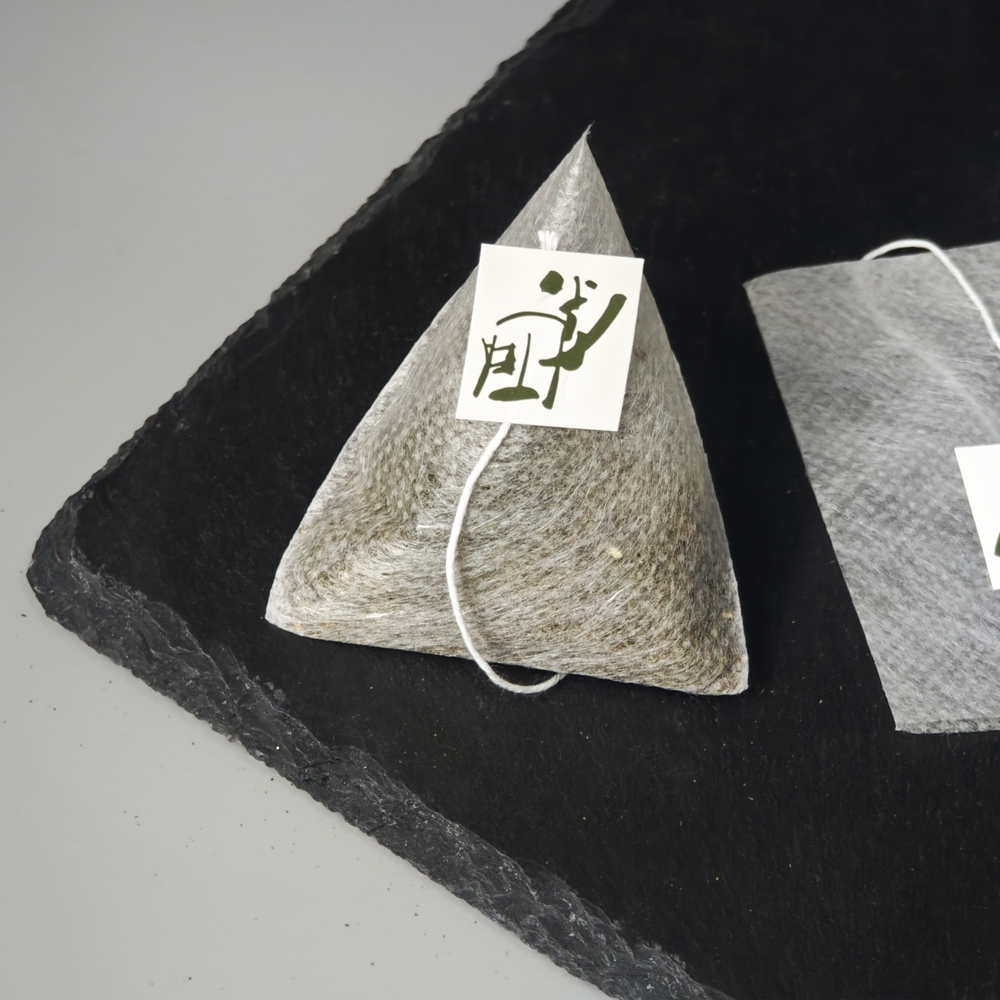
A pyramid tea bag is a three-dimensional tetrahedral sachet typically fabricated from flexible, permeable synthetic or bio-based meshes. Unlike flat designs formed by joining two flat planar layers along parallel edges, the pyramid structure is formed by indexing a continuous tubular web, performing an ultrasonic transverse seal, rotating the secondary sealing anvil by 90 degrees relative to the first, and cutting.
Tubular Mesh Feed ──> Transverse Seal A (0°) ──> Dosing ──> Transverse Seal B (90°) ──> Tetrahedron Cut
This geometric construction establishes a rigid-sided interior chamber that holds its three-dimensional volume even when wet. The visual transparency of the typical mesh substrate (woven monofilament PLA, nylon, or PET) allows the consumer to inspect the physical leaves, flowers, and spices before and during extraction.
Pyramid packaging equipment relies almost exclusively on ultrasonic sealing technology. Ultrasonic horns introduce mechanical acoustic oscillations (typically 20 kHz to 40 kHz) directly into the polymer layers under pressure. This acoustic friction melts thermoplastic fibers at a molecular level within milliseconds, eliminating the need for thermal heat bars, mechanical staples, or solvent-based adhesives.
What Are Flat Tea Bags?
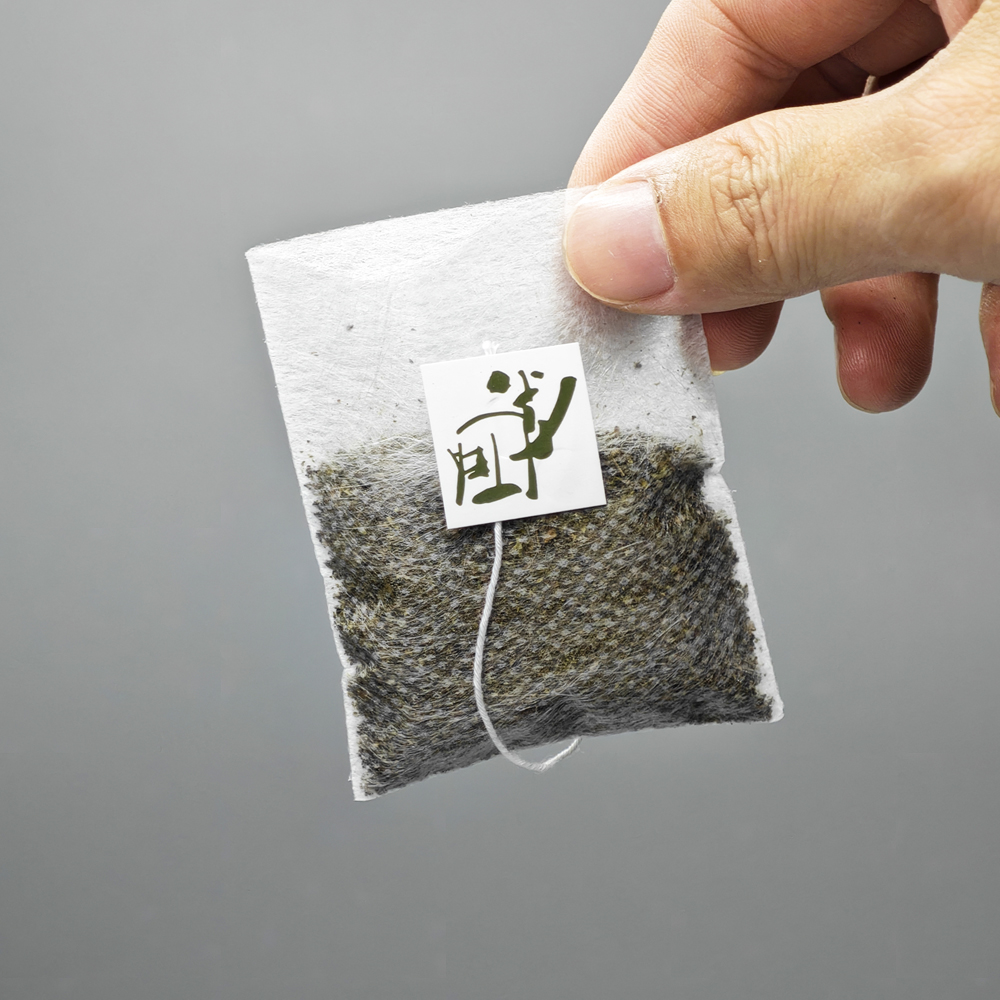
A flat tea bag is a two-dimensional, single- or double-chamber pouch constructed primarily from wet-laid, non-woven porous filter papers made of abacá (Manila hemp), wood pulp, and cellulosic plant fibers. Flat tea bags represent the historical foundation of industrialized tea packaging and are produced in three primary physical configurations:
-
Single-Chamber Heat-Seal Bags: Two web layers sealed along three or four flat edges using heated rollers. The paper traditionally incorporates an internal low-melt synthetic binder (polypropylene or PE, though modern variants utilize PLA dispersion coatings) comprising 15% to 30% of the paper matrix.
-
Double-Chamber Non-Heat-Seal Bags: Fabricated using specialized high-speed folding machinery (such as Constanta or IMA platforms). A single strip of high-tensile abacá filter paper is folded into an interconnected “W” profile to yield two active extraction chambers, secured at the top fold via a knotted thread or an aluminum micro-staple.
-
Pillow and Round Pod Bags: Unthreaded circular or rectangular filter paper pouches commonly used for institutional catering, hard-pod brewers, or mass-market breakfast tea boxes.
Flat tea bags are engineered for high-speed automated processing, compact case packaging, and rapid infusion of small-particle tea grades.
Key Differences Between Pyramid and Flat Formats
1. Volumetric Expansion Dynamics
The structural difference between a flat envelope and a tetrahedron directly dictates the volume of liquid that circulates around the leaf particles during brewing:
-
Pyramid Bags: Provide between 40% and 55% unobstructed volumetric clearance over the dry leaf dosing weight. As tea leaves absorb hot water, they can expand up to 400% of their original dehydrated volume without pressing against the interior membrane walls.
-
Flat Bags: Constrain leaf expansion. When hot water wets the leaves, swelling creates internal hydraulic pressure that packs the particles together into a dense “cake,” restricting convective fluid transfer to the leaf core.
2. Required Ingredient Cut Size (Mesh Size Calibration)
Ingredient cut size and particle distribution dictate whether a blend can be packed into flat or pyramid formats:
-
Flat Tea Bags: Require finely ground cuts, specifically Fannings and Dust grades (approximate particle diameter: 0.2 mm to 1.0 mm; US Tyler Sieve sizes 18 to 60), or fine Tea Bag Cut (TBC) botanicals. Large leaf fragments will puncture lightweight 12–17 g/m² filter paper or prevent proper dosing on high-speed volumetric cup fillers.
-
Pyramid Tea Bags: Engineered specifically for Orange Pekoe (OP), whole unbroken leaves, floral components (whole chamomile blossoms, rose buds), coarse citrus peels, and cracked spices (cinnamon chips, cardamom pods). The aperture size of woven PLA mesh (100–180 microns) permits clear fluid ingress without leaf fragmentation.
3. Sealing Chemistry and Mechanical Tooling
-
Flat Bags: Utilize either pure mechanical crimping/knotting (non-heat-seal paper, zero synthetic binders) or thermal conduction bars operating between 160°C and 220°C to activate thermoplastic binders blended into the paper matrix.
-
Pyramid Bags: Require thermoplastic monofilament or bicomponent staple fibers that melt under ultrasonic acoustic friction. Cellulose-only materials cannot be formed into stable pyramid bags on standard packaging lines without biopolymer coating.
Advantages of Pyramid Tea Bags
1. Sensory and Extraction Performance
Because whole leaves retain essential volatile oils and aromatic terpenes that dissipate when tea is pulverized into fannings, brewing whole leaves in a pyramid bag yields a cleaner, more complex cup. Convective water currents circulate freely through the tetrahedral matrix, allowing catechins, theaflavins, and amino acids (like L-theanine) to dissolve uniformly.
2. Consumer-Facing Visual Transparency
Woven monofilament PLA mesh features an open surface area with optical clarity. Consumers observe the physical composition of the blend—identifying silver tea tips, dehydrated fruit pieces, or whole saffron threads. This sensory experience is a core value driver for specialty tea retail.
3. Command of Significant Retail Price Premiums
In consumer-packaged-goods (CPG) retail, loose-leaf and pyramid-sachet stock keeping units (SKUs) consistently command higher price realizations per gram of finished tea compared to flat-bag alternatives:
-
Mass-market flat tea bags typically retail at $0.03 to $0.08 per count.
-
Specialty pyramid tea bags routinely retail at $0.35 to $0.85+ per count.
This delta allows brand owners to absorb higher packaging production costs while maintaining robust gross margins.
Advantages of Flat Tea Bags
1. High-Speed Production Efficiencies
Automated flat tea bag packing machinery operates at production speeds unmatched by ultrasonic pyramid lines:
-
Modern rotary flat-bag machines (e.g., IMA C24/C28, Fuso, or Maisa EC12) comfortably achieve speeds of 300 to 2,000 bags per minute.
-
High-speed pyramid packaging machinery typically operates between 50 and 90 bags per minute per lane (with specialized multi-lane machines reaching 120–200 bags/min).
-
For enterprise-scale procurement orders running into hundreds of millions of units annually, flat bags minimize plant run-time and labor per thousand units.
2. Lower Unit Material Cost
The base substrate cost of food-grade abacá/wood pulp filter paper (12–18 g/m²) is a fraction of the cost of woven PLA or nylon mesh rolls:
-
Standard heat-seal filter paper costs approximately $3.50 to $6.00 per kilogram.
-
Certified woven PLA mesh rolls (pre-tagged with ultrasonic strings) average $18.00 to $32.00 per kilogram.
3. Compact Packaging and Freight Volume
Flat tea bags lay flush against one another. A carton measuring $150 \times 80 \times 70\text{ mm}$ can easily pack 50 to 100 flat tea bags. Conversely, pyramid tea bags occupy significant structural volume even when unbrewed, requiring larger folding cartons, bulk canisters, or oversized stand-up barrier pouches. Consequently, flat tea bags optimize palletization density, ocean container cube utilization, and warehousing overhead.
4. Established Home-Compostability Pathways
Non-heat-seal, double-chamber flat tea bags (crimped, stitched, or knotted with 100% unbleached cotton thread) contain zero synthetic resins. They break down in municipal or backyard composting environments within 6 to 12 weeks, presenting an uncomplicated waste story for institutional buyers.
Technical Performance and Extraction Comparison
Infusion efficiency is governed by the physical laws of mass transfer:
$$J = -D \frac{dC}{dx}$$
Where $J$ represents the diffusion flux of soluble tea solids, $D$ is the diffusion coefficient, and $dC/dx$ is the concentration gradient between the interior of the bag and the surrounding water.
FLAT TEA BAG (Dust/Fannings)               PYRAMID TEA BAG (Whole Leaf)
───────────────────────────────────        ─────────────────────────────────────
• Instant high-gradient extraction         • Convective circulation throughout
• Rapid color saturation (<60 sec)         • Multi-stage extraction (3 to 5 min)
• High surface area = rapid extraction     • Dynamic leaf unrolling preserves
• Risk of bitter tannin extraction           delicate aromatics and top notes
Because flat tea bags use fine particles, the surface-area-to-volume ratio ($SA/V$) is high. Extraction occurs almost immediately, saturating the water with color and brisk tannins within 45 to 60 seconds. However, this high extraction rate risks stripping bitter polyphenols and particulate sediment into the cup.
Pyramid tea bags hold larger, lower-surface-area leaf cuts. Extraction progresses gradually over 3 to 5 minutes as hot water circulates through the interior volume, allowing volatile aromatics to release without cloudiness or heavy sediment.
| Technical Parameter | Flat Tea Bag (Standard Abacá Blend) | Pyramid Tea Bag (Woven PLA Mesh) |
| Material Base Weight | 12 – 18 g/m² | 18 – 24 g/m² |
| Mesh Aperture Size | 20 – 50 microns (tortuous fiber path) | 120 – 180 microns (structured square weave) |
| Water Permeability | 1,200 – 3,500 L/m²/s (at 100 Pa) | 4,000 – 6,500 L/m²/s (at 100 Pa) |
| Sediment Fallout (Dust) | Very Low (<0.5% dry mass) | Low to Medium (higher if using non-sieved cuts) |
| Volumetric Efficiency | ~1.5–2.5 cm³ occupied volume | ~8.0–14.0 cm³ occupied volume |
| Sealing Strength | 0.25 – 0.60 kN/m (thermal/crimp) | 0.65 – 1.10 kN/m (ultrasonic molecular weld) |
| Brew Temperature Limit | Stable up to 100°C (neutral hydrolytic response) | Thermally stable up to 100°C (high-crystallinity PLA) |
Cost Comparison: Comprehensive Total Cost of Ownership (TCO)
When evaluating packaging economics, procurement specialists must evaluate the complete unit cost structure rather than raw substrate pricing alone.
Direct Material Costs (Mesh/Paper, Tag, String)
+ Production Labor & Line Speed Capacity
+ Scrap / Rejection Rate (Ultrasonic vs Mechanical)
+ Secondary Packaging (Overwraps, Folding Cartons)
+ Palletization & Inbound/Outbound Logistics
= True Unit Cost of Ownership
1. Direct Material Costs
-
Pyramid Bags: A finished pyramid bag constructed from certified woven PLA mesh, pre-applied with an ultrasonic cotton thread and customized printed tag, averages $0.022 to $0.045 per empty sachet.
-
Flat Bags: An equivalent unprinted heat-sealable paper filter bag with staple, string, and tag averages $0.006 to $0.014 per unit. Stringless pillow bags sit even lower, between $0.003 and $0.006 per unit.
2. Secondary Overwrap and Barrier Protection
-
Pyramid Formats: Because woven mesh is porous, individual pyramid bags require secondary nitrogen-flushed individual foil sachets (metallized PET/PE or high-barrier paper/EVOH laminates) to prevent oxidation, or must be packed in bulk into resealable, gas-tight stand-up pouches. This secondary packaging often costs more than the primary bag ($0.035 to $0.070 per sachet).
-
Flat Formats: Often packed bare directly into retail paperboard cartons (wrapped in clear exterior BOPP film) or into simple, compact paper envelopes, minimizing packaging layers.
3. Shipping and Logistical Footprint
Due to their spatial bulk, packed pyramid tea bags yield roughly 40% to 60% lower unit density inside a standard 40-foot High-Cube shipping container compared to packed flat tea bags. For international distribution networks, this structural difference translates directly into higher shipping costs per individual serving.
Environmental Impact and End-of-Life Profile
Sustainable procurement decisions require navigating industrial versus home compostability, biopolymer degradation conditions, and municipal waste handling.
                    Waste Processing Pathways
                               │
       ┌───────────────────────┴───────────────────────┐
       ▼                                               ▼
[ Industrial Composting Facility ]           [ Backyard Home Compost ]
• Requires: 58°C - 65°C                      • Requires: Ambient temp (20°C - 30°C)
• High, sustained humidity                   • Passive microbial decomposition
• Processes: PLA Pyramid Mesh                • Processes: Unsealed Abacá Paper Bags
• Standard: EN 13432 / ASTM D6400            • Standard: TÜV OK compost HOME
1. Polylactic Acid (PLA) Pyramid Bags
-
Origin: Fermented plant dextrose derived from corn, sugarcane, or cassava.
-
Compostability: Woven PLA is industrially compostable under controlled thermophilic conditions pursuant to EN 13432 and ASTM D6400 (temperatures exceeding 58°C, balanced moisture, and active microbial digestion). In this commercial environment, it converts to $CO_2$, water, and biomass within 90 to 180 days.
-
Limitations: In a low-temperature backyard home compost or marine environment, PLA degrades very slowly. If an enterprise brand markets PLA tea bags as “100% biodegradable” without clarifying the industrial composting requirement, it risks regulatory scrutiny under greenwashing enforcement directives (such as the EU Green Claims Directive or US FTC Green Guides).
-
Nylon/PET Warning: Petroleum-derived nylon and PET mesh formats are non-biodegradable and release persistent synthetic microplastics into hot water. Enterprise brand procurement teams are rapidly phasing out these substrates.
2. Abacá/Cellulose Flat Filter Papers
-
Origin: Natural wood pulps combined with long-staple abacá plant fibers.
-
Compostability: When produced without petroleum-derived thermoplastic heat-seal resins, flat filter paper is home compostable (certified under TÜV Austria OK compost HOME or AS 5810).
-
Limitations: If the paper incorporates a conventional polypropylene (PP) heat-seal binder layer, the cellulose fibers decompose while the micro-polypropylene web remains behind, contaminating finished compost with plastic residue. Procurement managers must demand certified plastic-free papers utilizing biopolymer dispersion coatings or transition to folded/stitched non-heat-seal formats.
Applications Comparison Across Market Segments
Market Segment Match:

Specialty Tea Brands & DTC Retail       ───>  Pyramid Tea Bags (Woven PLA)
Gifting, Luxury Hospitality & Spas      ───>  Pyramid Tea Bags (Woven PLA)
Mass Grocery & High-Turnover Retail     ───>  Flat Tea Bags (Heat-Seal Paper)
Institutional Food Service & Catering   ───>  Flat Tea Bags (Double-Chamber / Pillow)
Airline, Healthcare & High-Volume B2B   ───>  Flat Tea Bags (Paper Envelopes)
1. Specialty Tea Brands and Direct-to-Consumer (DTC)
-
Optimal Selection: Pyramid Tea Bags (Woven PLA).
-
Strategic Rationale: DTC and specialty tea consumers prioritize whole botanicals, premium single-estate provenance, and visual product presentation. The higher unit cost is absorbed within direct retail margins, and the consumer perceives the pyramid form factor as a premium upgrade over grocery-store offerings.
2. Commercial Food Service, Hotels, and Quick-Service Restaurants (QSR)
-
Optimal Selection: Flat Tea Bags (Single or Double Chamber).
-
Strategic Rationale: In high-volume food service, operational speed, cost-per-cup consistency, and rapid color extraction are paramount. A customer ordering breakfast tea at an airport lounge or chain cafe expects instant infusion, not a 5-minute extraction cycle. Compact storage behind the counter is an operational necessity.
3. Private-Label Supermarket House Brands
-
Optimal Selection: Tiered Portfolio (Both Formats).
-
Strategic Rationale: Major retail chains typically procure both configurations to cover two distinct price points: flat tea bags for standard value-tier SKUs (e.g., standard English Breakfast 100-count boxes) and pyramid PLA bags for premium private-label lines (e.g., organic artisan herbal blends 15-count canisters).
Pros and Cons Summary
Pyramid Tea Bags
-
Pros:
-
Accommodates whole leaves, large botanicals, and real fruit inclusions without leaf breakage.
-
Maximum volumetric clearance allows unhindered expansion and nuanced flavor extraction.
-
Translucent mesh creates strong visual merchandising appeal on store shelves.
-
Ultrasonic construction eliminates the need for thermal heat-seal adhesives or metal staples.
-
Commands higher retail price points and defensible brand margins.
-
-
Cons:
-
High base packaging material cost ($0.022–$0.045 per empty unit).
-
Packaging machinery runs at lower speeds (50–120 units per minute).
-
Higher storage footprint and container freight costs due to lower pack density.
-
PLA mesh requires commercial industrial composting facilities for proper end-of-life disposal.
-
Flat Tea Bags
-
Pros:
-
Low unit production cost ($0.003–$0.014 per unit).
-
High-speed manufacturing throughput (up to 2,000 bags per minute).
-
Efficient shipping density maximizes container cube utilization.
-
Immediate infusion response, well-suited for high-volume food service environments.
-
Non-heat-seal abacá configurations offer certified home-compostability.
-
-
Cons:
-
Restricted internal volume impedes whole-leaf expansion.
-
Limited to finely ground dust, fannings, or small-cut botanical ingredients.
-
Opaque paper hides the blend components from the consumer.
-
Sits primarily in price-sensitive mass-market grocery and institutional categories.
-
Which One Is Better?
Neither format is universally superior; each solves a distinct set of technical and commercial challenges:
-
Pyramid tea bags are objectively superior for flavor profiles requiring whole leaves and visually prominent blends. When the formulation relies on whole tippy teas, delicate white teas, unbroken oolongs, or large decorative botanicals, packing them into a flat paper bag breaks the leaf structure, crushes the botanicals, and restrains infusion.
-
Flat tea bags are objectively superior for high-volume, cost-constrained, and rapid-infusion applications. When managing large retail breakfast programs, institutional catering, airline supply, or value grocery lines, the flat bag’s high-speed packing economics, low unit cost, and compact logistics remain unmatched.
Strategic Buyer Checklist: How Procurement Managers Should Choose
                    Blend & Leaf Sizing Audit
                               │
         Is the blend whole leaf, coarse, or botanical?
                               │
              ┌────────────────┴────────────────┐
             YES                                NO
              │                                 │
              ▼                                 ▼
   [ Choose Pyramid Format ]          [ Choose Flat Format ]
   • Material: Woven PLA              • Material: Abacá Filter Paper
   • Sealing: Ultrasonic              • Sealing: Crimp, Knot, or PLA Heat-Seal
   • Cert: EN 13432 / BPI             • Cert: OK compost HOME
   • Packing: Nitro-Flushed Pouch     • Packing: Direct Cartoning
When evaluating tenders, issuing requests for proposals (RFPs), or configuring a new packaging line, procurement teams should audit suppliers against six core criteria:
-
Ingredient Size Analysis: Conduct a mechanical sieve analysis on your blend. If more than 30% of the dry weight consists of leaf fragments larger than 2.0 mm, specify pyramid bags. If the blend consists predominantly of fannings or fine-cut botanicals ($<1.0\text{ mm}$), specify flat bags to prevent particulate leakage through open mesh pores.
-
Machinery Capital and Tooling Compatibility: Audit your existing contract packager’s machinery assets. Retrofitting a flat-bag packaging line to handle ultrasonic pyramid production requires entirely different feeding, indexing, and ultrasonic sealing systems. If starting fresh, factor in the CapEx differential between a multi-lane pyramid line and a rotary high-speed paper line.
-
Audit Material Traceability and Food-Contact Certifications: Ensure your roll-stock converter provides verified documentation:
-
US FDA: 21 CFR § 177.1630 (polymers) or 21 CFR § 176.170 (paper and paperboard).
-
European Union: Regulation (EU) No 10/2011 (plastics and biopolymers in food contact) including heavy metal and overall migration limit (OML) lab testing in hot aqueous simulants.
-
Traceability: FSC (Forest Stewardship Council) for paper sources and non-GMO certification for plant starch-derived PLA.
-
-
Clarify End-of-Life Packaging Claims: Align the material specification with the waste infrastructure of your primary consumer market. If selling in markets with established municipal organic waste collection (such as Germany, the UK, or Seattle/San Francisco), certified industrial compostable PLA pyramid mesh is an asset. If selling in areas lacking commercial composting infrastructure, specify home-compostable abacá paper for flat formats.
-
Secondary Barrier Integration: Factor in your secondary packaging requirements. Will the bags be packaged loose in a tin, boxed inside an airtight inner foil liner, or individually wrapped in barrier sachets? Factor these downstream packaging costs into your product margin models.
-
Supply Chain Partnership: Work with integrated manufacturing partners who specialize across both precision converting and certified sustainable substrates. Established packaging manufacturers like Sokoo Group provide tested roll-stock materials—from certified woven PLA mesh with pre-attached tags and strings to high-tensile abacá filter papers—engineered to run reliably on high-speed automated packaging machinery.
Frequently Asked Questions
1. Do pyramid tea bags leach microplastics into hot tea?
If the pyramid tea bag is fabricated from traditional petrochemical polymers like nylon (polyamide) or PET (polyethylene terephthalate), peer-reviewed chemical studies show it can release billions of micro- and nanoplastic particles into hot water. However, if the bag is made from certified 100% bio-based PLA (polylactic acid derived from fermented plant starch), it does not release synthetic petroleum microplastics. Buyers should require verifiable raw material test reports to confirm the substrate is pure bio-based PLA rather than a synthetic polymer blend.
2. Can you pack fine-dust tea grades into a pyramid tea bag?
Technically yes, but it is poor practice. The woven monofilament structure of a pyramid bag has apertures ranging from 100 to 180 microns. Fine tea dust and small botanical particles will sift through these openings during shipping, coating the interior of the box or pouch with unsightly powder. Fine tea grades should be packed in wet-laid filter papers with tighter pore paths (20 to 50 microns).
3. Are all flat tea bags biodegradable in a home compost bin?
No. Traditional flat tea bags designed for heat-sealing often contain a blend of 15% to 30% synthetic thermoplastic fibers (such as polypropylene or polyethylene) within the paper pulp to allow heat fusion. These synthetic binders do not degrade in home compost and leave microplastic residues. Truly home-compostable flat tea bags must use non-heat-seal paper (folded and sewn/crimped without plastic) or paper with certified biodegradable water-based or PLA biopolymer sealants.
4. Why are production line speeds slower for pyramid tea bags?
Pyramid tea bag packaging machines rely on high-frequency ultrasonic sealing units that must physically clamp, weld, and cool the biopolymer web for each bag, alternating the sealing anvil 90 degrees on every stroke. This indexing mechanical motion limits single-lane machine speeds to approximately 50 to 90 units per minute. Conversely, flat tea bags run on continuous rotary drums, high-speed folders, or continuous heat-sealing rollers that can process up to 2,000 units per minute.
5. What are the storage requirements for unsealed PLA pyramid mesh rolls?
PLA is sensitive to heat, ultraviolet radiation, and elevated ambient humidity. Master rolls should be stored in climate-controlled warehouses maintained at temperatures between 15°C and 25°C with relative humidity below 50%. Exposure to ambient temperatures above 45°C can cause the material to reach its glass transition state ($T_g$), leading to web distortion, brittle edges, and tracking failures on packaging lines.
6. Can ultrasonic sealing systems run conventional filter paper?
Standard cellulose filter papers lacking thermoplastic properties cannot be sealed using ultrasonic systems alone; they lack the low-melt polymer component required to form an acoustic molecular bond. To run on an ultrasonic line, filter papers must incorporate a specialized PLA bi-component fiber or be engineered with compatible bio-sealant coatings.
Conclusion
The choice between pyramid and flat tea bags is a strategic product architecture decision that balances sensory performance against operational scale:
-
Pyramid tea bags are the optimal technical vehicle for premium, whole-leaf, and artisanal botanical blends. They provide the internal volume needed for full physical expansion, deliver high visual value, and support premium retail pricing that absorbs higher packaging and logistics costs.
-
Flat tea bags remain the workhorse of global mass-market tea packaging. They deliver rapid production speeds, low unit material costs, exceptional shipping efficiency, and broad suitability for quick-infusion tea grades across large retail, hospitality, and institutional accounts.
Enterprise procurement teams, contract packagers, and brand owners must align their packaging choices with leaf cut-size specifications, factory equipment capabilities, retail pricing targets, and regional compost infrastructure. By sourcing certified, machine-tested roll stock through experienced manufacturing partners like Sokoo Group, packaging buyers can maintain consistent line efficiencies, meet international regulatory mandates, and deliver an uncompromised beverage experience across every market tier.
Post time: Sep-17-2026


