As specialty tea brands, private-label roasters, and beverage distributors navigate rising consumer demand for premium taste and sustainable packaging, understanding the technical chemistry of the teacup has become essential. Today, packaging material specialist Sokoo Group released an in-depth B2B buyer guide examining how tea bag material impacts flavor, providing procurement managers and brand owners with actionable data to optimize extraction, protect delicate aromatics, and streamline global compliance.
The comprehensive guide highlights that tea packaging is an active variable in beverage formulation rather than an inert container. Immersed in water at 95°C to 100°C, different filter membranes exert distinct physical and chemical influences on infusion dynamics, volatile terpene preservation, and sensory neutrality.
“Many brand managers invest months perfecting a single-origin whole-leaf blend, only to see its delicate floral and brisk notes compromised by the wrong filter substrate,” said a spokesperson for Sokoo Group. “Our technical guide bridges the gap between extraction science and packaging procurement, helping importers, co-packers, and distributors make data-driven material decisions that preserve true cup character.”
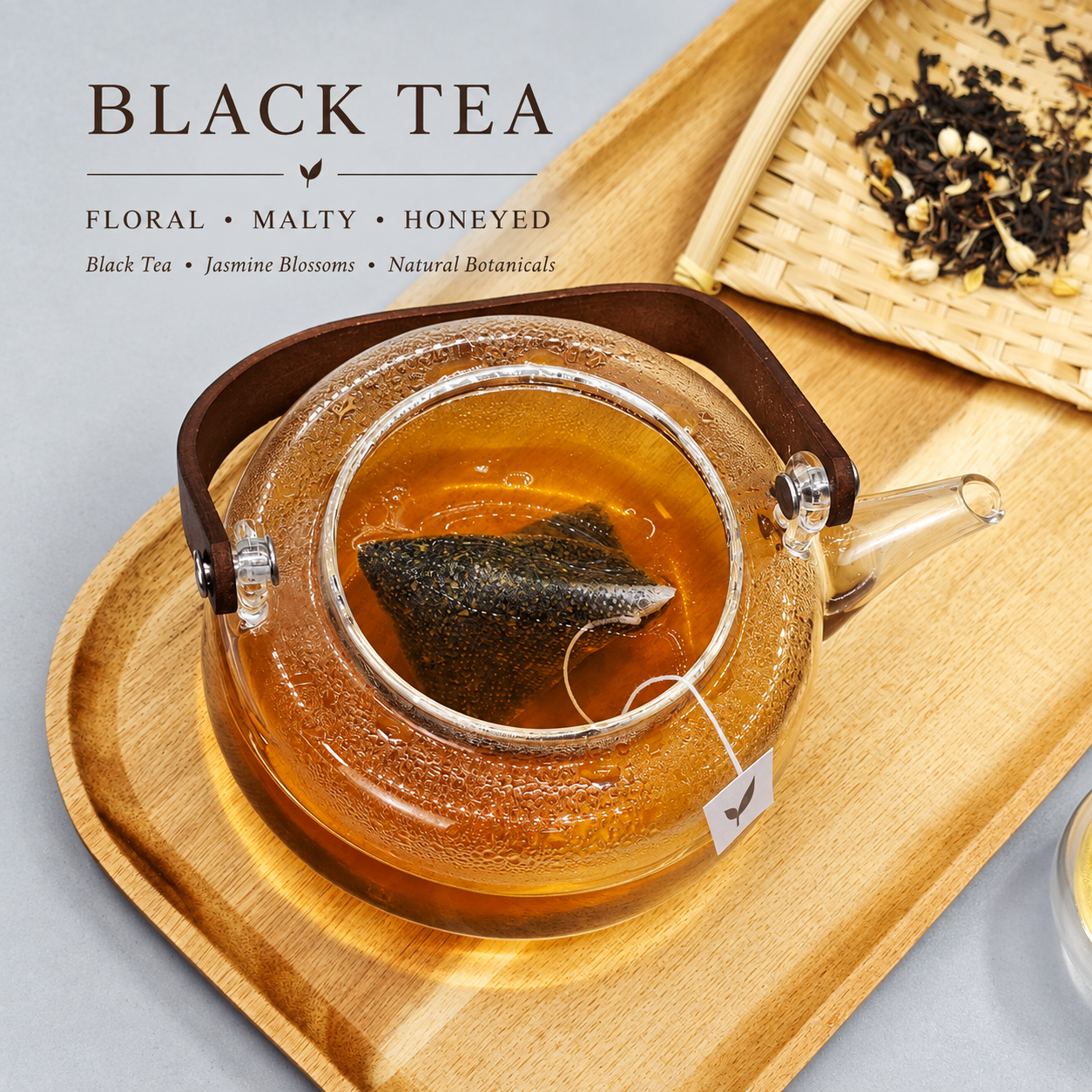
How Tea Bag Material Impacts Flavor: A Technical Procurement Guide for Beverage Brands
In the commercial beverage industry, blend development typically commands significant investment. Master blenders spend months calibrating origins, seasonal harvests, leaf grades, and roasting profiles to achieve precise balance.
Yet an equally critical variable often receives insufficient technical scrutiny: the filtration substrate.
During extraction, a tea sachet is subjected to extreme hydrothermal conditions—submerged in water between 90°C and 100°C for three to seven minutes. Under this thermal load, the packaging membrane is an active participant in fluid mechanics and mass transfer. Pore geometry, surface wettability, chemical stability, and structural volume govern the diffusion of catechins, theaflavins, amino acids, and volatile aromatic oils.
For procurement managers, contract packagers, and tea brand owners, understanding how tea bag material impacts flavor is essential to engineering a consistent, high-scoring beverage experience while managing factory-floor converting efficiency.
1. Product Overview: The Physics and Chemistry of Extraction
The sensory profile of steeped tea depends on the selective diffusion of soluble solids and the volatilization of aromatic compounds. Scientifically, this process follows Fick’s first law of steady-state diffusion:
When tea leaf cells hydrate, they swell and release volatile terpenes, polyphenols, caffeine, and amino acids (chiefly L-theanine). If a substrate has a high tortuosity factor—forcing water through dense, winding cellulose pathways—mass transfer is delayed, and larger aromatic molecules can become adsorbed onto the fiber walls. Conversely, open-aperture woven meshes permit rapid convective flushing, preventing localized over-extraction that causes astringency.
2. Material Breakdown: Structural and Sensory Properties
Four primary substrate families dominate the global tea packaging supply chain. Each presents unique structural, thermal, and sensory characteristics.
A. Woven Polylactic Acid (PLA) Mesh
-
Feedstock Source: 100% bio-based dextrose derived from fermented plant starch (corn, cassava, or sugarcane), polymerized into poly-L-lactic acid (PLLA).
-
Structural Geometry: Monofilament woven mesh with square, uniform apertures calibrated between 120 and 180 microns; basis weight of 18–27 g/m².
-
Sensory Influence: Woven PLA is chemically inert in hot water ($<100^\circ\text{C}$). The open mesh matrix produces virtually zero fluid friction, enabling convective water currents to circulate through the bag. Because monofilament fibers have minimal internal surface area, they do not adsorb volatile aromatic oils, leaving delicate floral notes, muscatel profiles, and top notes completely intact.
B. Natural Abacá & Wood Pulp Filter Paper
-
Feedstock Source: Wet-laid long-staple abacá plant fibers (Musa textilis) blended with virgin wood cellulose.
-
Structural Geometry: Non-woven fibrous mat featuring a tortuous pore network with micro-apertures averaging 20 to 60 microns; basis weight of 12–21 g/m².
-
Sensory Influence: Abacá papers provide high particle retention, preventing fine dust and sediment from entering the cup and creating a clean, bright liquor. However, unrefined wood pulps can occasionally impart a faint woody or papery note if not thoroughly washed. High-grade, oxygen-bleached or premium unbleached abacá fibers mitigate this issue, delivering an organoleptically neutral profile.
C. Traditional Synthetic Nylon (Polyamide 6 / PA66) Mesh
-
Feedstock Source: Petrochemical-derived petroleum polymers.
-
Structural Geometry: High-tensile, glossy monofilament woven mesh with apertures of 100 to 200 microns.
-
Sensory Influence: While structurally robust and visually clear, nylon can release trace volatile cyclic oligomers and caprolactam residues when exposed to boiling water, which sensitive palates perceive as a subtle chemical or plasticky aftertaste. Furthermore, nylon sheds microplastics and nanoplastics under boiling extraction, leading many international brands to phase out the material.
D. Non-Woven PLA Spunbond / Meltblown
-
Feedstock Source: Thermally bonded continuous PLA micro-filaments.
-
Structural Geometry: Randomized non-woven mesh combining the bio-based origin of PLA with the micro-particle trapping properties of paper (pore sizes 30–80 microns).
-
Sensory Influence: Bridges the gap between open mesh and dense paper. It delivers neutral taste transfer with improved particulate filtration, making it suitable for medium-cut blends and fine herbal powders.
3. Substrate Comparison Matrix
The table below outlines the core technical, mechanical, and sensory metrics across commercial tea filtration substrates:
| Engineering Parameter | Woven PLA Mesh (Corn/Cane) | Abacá Virgin Paper (Non-Heat-Seal) | Standard Heat-Seal Paper (PP Blend) | Woven Nylon Mesh (PA6) |
| Material Base | Fermented plant starch | Natural Manila hemp/pulp | Pulp + Polypropylene (15–30%) | Petrochemical polyamide |
| Aperture Size | 120 – 180 µm | 20 – 60 µm | 15 – 50 µm | 100 – 200 µm |
| Water Permeability | 4,000 – 6,500 L/m²/s | 1,500 – 3,500 L/m²/s | 1,000 – 2,200 L/m²/s | 4,500 – 7,000 L/m²/s |
| Aroma Adsorption | Negligible (monofilament) | Low to Moderate | Moderate | Low |
| Extraction Kinetics | Smooth, multi-tiered | Rapid front-end surge | Rapid front-end surge | Smooth, multi-tiered |
| Sediment Fallout | Moderate (with fine cuts) | Ultra-Low (<0.5%) | Ultra-Low (<0.5%) | Moderate (with fine cuts) |
| Flavor Neutrality | Superior (Rating: 4.9/5.0) | High (Rating: 4.6/5.0) | Moderate (Rating: 3.8/5.0) | Moderate (Rating: 3.9/5.0) |
| Ultrasonic Weldable | Yes (Excellent) | No (Requires fold/stitch) | Thermal heat-seal only | Yes (Excellent) |
| End-of-Life Profile | Industrial Compost (EN 13432) | Home Compostable | Non-biodegradable residue | Non-biodegradable |
4. How Material Selection Impacts Key Applications
Whole-Leaf Greens, Oolongs, and White Teas
-
Challenge: High concentrations of delicate aromatic linalool, geraniol, and amino acids; leaves expand up to four times their dehydrated volume.
-
Optimal Material: Woven PLA Mesh in a Pyramid Format.
-
Why: Unconstrained volume and wide apertures let whole leaves unfold naturally. The water exchange remains gentle and continuous, allowing sweet theanine and light volatile notes to extract without extracting bitter polyphenols prematurely.
Commercial Black Breakfast Teas (CTC and BOP Fannings)
-
Challenge: Pulverized leaf fragments (0.5 mm to 1.5 mm) generate fine dust that can leak into the brew, while consumers expect dark color and strong briskness within 60 seconds.
-
Optimal Material: Abacá/Cellulose Non-Woven Filter Paper.
-
Why: Tight fiber apertures capture dust while high capillary wicking accelerates hydration, releasing bold tannins and theaflavins on contact.
Aromatic Herbals, Fruit Tisanes, and Spices
-
Challenge: Heavy essential oils (peppermint, citrus peel, cinnamon, chamomile) can coat packaging fibers, while powdered botanicals can create cloudy cup sediment.
-
Optimal Material: Non-Woven Spunbond PLA or High-Porosity Abacá.
-
Why: Balances particle retention with lipid neutrality, ensuring essential oil droplets pass into the liquor without leaving heavy residues on the packaging web.
5. Strategic Advantages of Optimized Material Selection
Matching tea grade to the right filtration substrate yields measurable commercial advantages:
                            COMMERCIAL ADVANTAGES
                                       │
     ─────────────────┬────────────────
     ▼                  ▼                    ▼                  ▼
Sensory Fidelity     Sediment Control    Regulatory Risk      Pricing Power
(True-to-blend cup   (Clear, visually    Mitigation           (Commands premium
 profiles)           clean liquor)       (Zero microplastics) retail margins)
-
Sensory Fidelity: Eliminates off-tastes, cardboard notes, and plastic odors, preserving the profile developed by the master blender.
-
Sediment Control: Calibrated pore diameters prevent particulate sludge at the bottom of the consumer’s mug without restricting flow.
-
Regulatory Risk Mitigation: Certified bio-based materials (such as PLA and unbleached abacá) comply with strict global packaging waste mandates, avoiding extended producer responsibility (EPR) penalties and greenwashing scrutiny.
-
Higher Retail Margins: Transparent woven meshes display the quality of whole botanicals, supporting premium price realizations in specialty retail and hospitality channels.
6. Customization Capabilities
Modern converting facilities offer extensive tailoring to match precise brand, mechanical, and regulatory specifications:
-
Slit Widths: Standard roll widths include 120 mm, 140 mm, 160 mm, and 180 mm, slit to tight tolerances ($\pm 0.5\text{ mm}$) for high-speed automated form-fill-seal (FFS) packaging machines (such as Fuso, Maisa, and IMA lines).
-
Tag Customization: Uncoated or aqueous-coated paper tags (standard dimensions $28 \times 32\text{ mm}$ or $25 \times 25\text{ mm}$) printed in up to 6 colors using water-based or soy inks.
-
Drawstring Attachment: Ultrasonic line-pitch bonding at fixed intervals (typically 120 mm to 150 mm spacing) using pure organic unbleached cotton or continuous PLA filament threads.
-
Mesh Finishes: Available in high-gloss transparency, semi-translucent matte, and custom mesh density configurations (100 mesh to 140 mesh).
7. Commercial Procurement Parameters: MOQ and Lead Times
To help procurement managers plan inventory and production schedules, typical supply specifications are outlined below:
┌────────────────────────────────────────────────────────┐
            STANDARD COMMERCIAL ORDER METRICS
├────────────────────────────────────────────────────────┤
• Sample Dispatch:         3 to 5 business days
• Custom Plain Rolls:      MOQ 50 to 100 kg
• Custom Printed Tag/Roll: MOQ 200 to 500 kg
• Production Turnaround:   15 to 25 business days
 • Core Tolerances:         76 mm (3") standard cores
└────────────────────────────────────────────────────────┘
-
Minimum Order Quantities (MOQs):
-
Standard Plain Roll Stock (PLA / Abacá): 50 kg to 100 kg per specification.
-
Custom Pre-Tagged & Threaded Rolls: 200 kg to 500 kg (driven by printing plate setup and ultrasonic thread alignment calibration).
-
Trial / Pilot Sample Rolls: Available upon qualification (typically 1 to 2 sample rolls for line compatibility testing).
-
-
Production Lead Times:
-
In-Stock Standard Web Formats: Dispatched within 5 to 7 business days.
-
Custom Tag Printing & Ultrasonic Converting: 15 to 25 business days from digital proof sign-off.
-
Ocean Transit Times: 14 to 35 days depending on destination port (North America, Europe, Middle East).
-
8. Food Contact and Compostability Certifications
Procurement managers should require verified third-party laboratory documentation from suppliers across two primary pillars:
-
Food Contact Safety:
-
US FDA: Adherence to 21 CFR § 176.170 (paper) and 21 CFR § 177.1630 (polymers), validating safety under boiling-water extraction.
-
European Union: Compliance with Regulation (EC) No 1935/2004 and Regulation (EU) No 10/2011, confirming overall migration limits ($<10\text{ mg/dm}^2$) in hot aqueous and acidic simulants.
-
Sensory Compliance (LFGB / DIN 10955): Formal sensory panel testing verifying zero taste or odor transfer to pure boiled water.
-
-
Environmental and Compostability Verifications:
-
Industrial Compostability: Validated under EN 13432 (Europe) and ASTM D6400 (North America), certified via TÜV AUSTRIA, DIN CERTCO, or BPI.
-
Home Compostability: TÜV OK compost HOME or AS 5810 certification (applicable to unsealed abacá/cellulose papers).
-
Fiber Traceability: FSC (Forest Stewardship Council) or PEFC chain-of-custody validation for wood and abacá pulps.
-
9. Frequently Asked Questions (FAQ)
Does PLA mesh impart any plastic taste to hot tea?
No. High-purity, food-grade PLA is made from polymerized lactic acid derived from plant starches. When exposed to hot water ($100^\circ\text{C}$), it is organoleptically neutral and releases no chemical odor. Unlike petrochemical nylon, it lacks volatile cyclic oligomers and synthetic plasticizers.
Can whole-leaf tea extract properly in a flat paper filter bag?
Extraction is compromised. Whole tea leaves require room to swell to three to four times their dehydrated volume. In a confined flat bag, the swelling leaves pack together, restricting water circulation to the center of the leaf mass. This slows overall extraction and can skew the brew toward bitter, fast-extracting surface tannins.
Why do some tea bags leave a papery aftertaste?
A papery aftertaste typically stems from low-cost, under-refined wood pulp paper, or paper bleached with elemental chlorine. High-grade filter papers prevent this by blending long-staple abacá fibers with thoroughly washed pulp processed using oxygen or hydrogen peroxide (Totally Chlorine-Free/TCF methods).
Will ultrasonic sealing damage bio-based PLA mesh?
No. Ultrasonic sealing is the preferred method for converting PLA. High-frequency acoustic vibrations melt the thermoplastic biopolymer locally within milliseconds, forming a clean bond without high conductive heat that could scorch or warp surrounding fibers.
How does pore size impact cloudy sediment in herbal blends?
Pore size directly controls particulate migration. Woven mesh (120–180 µm) can let fine botanical dust settle into the cup. If an herbal blend contains fine powders, buyers should specify a dense wet-laid non-woven (20–50 µm) or spunbond biopolymer web to keep the liquor clear.
10. Conclusion and Strategic Next Steps
Tea bag material selection is a foundational component of beverage product engineering. Substrate selection dictates mass transfer efficiency, particulate clarity, aromatic volatility, and high-speed packaging performance.
-
For whole-leaf, premium single-origin, and botanical blends, woven PLA mesh in a pyramid format delivers the volumetric expansion, convective circulation, and neutral sensory properties required to replicate a loose-leaf brewing experience.
-
For high-volume commercial black teas and rapid-infusion food service blends, abacá-blend non-woven filter paper provides fast extraction, effective dust containment, and dependable high-speed machine throughput.
Balancing flavor preservation, line runnability, and global compliance requires close collaboration with an experienced, certified packaging manufacturer.
Optimize Your Tea Packaging with Sokoo Group
Sokoo Group engineers and manufactures certified, food-grade tea and coffee filtration substrates for global brands, contract packers, and distributors:
-
100% Certified Food-Safe Materials: Sourced from non-GMO plant starches and virgin abacá pulps, independently tested against US FDA, EU No 10/2011, and LFGB standards.
-
Precision Converting: Custom slit widths, high-tensile ultrasonic pre-tagging, and food-grade vegetable-ink printing engineered for high-speed automated packaging lines.
-
Global Supply Chain Support: Reliable MOQs, transparent batch traceability, and rapid international fulfillment.
Protect your blend’s true flavor. Visit sokoogroup.com or contact sales@sokoogroup.com to request technical data sheets, compliance dossiers, and free material sample rolls.
Post time: Sep-25-2026


