The European Union is fundamentally reshaping the global packaging landscape. For importers, distributors, and food service buyers navigating the European market, the introduction of Regulation (EU) 2025/40—part of the sweeping Packaging and Packaging Waste Regulation (PPWR)—represents one of the most significant compliance hurdles in a decade.
At the center of this legislative shift is a strict crackdown on “forever chemicals,” specifically Per- and polyfluoroalkyl substances (PFAS). For the coffee industry, this legislation directly impacts single-serve formats. Drip coffee filter bags, which involve direct, high-temperature food contact, are facing unprecedented scrutiny.
This comprehensive guide breaks down the Total Fluorine testing requirements under Regulation (EU) 2025/40, explains how to interpret SGS certificates, and provides actionable strategies for procurement managers to ensure their supply chains remain compliant, safe, and profitable.
What Is the Total Fluorine Certification Under Regulation (EU) 2025/40?
To understand the certification, buyers must first understand the chemistry of modern packaging.
Understanding PFAS and the Need for Fluorine Testing
PFAS (Per- and polyfluoroalkyl substances) are a group of over 10,000 synthetic chemicals historically used in packaging to provide grease, oil, and water resistance. However, these chemicals do not break down in the environment or the human body, earning them the nickname “forever chemicals.”
Because testing for 10,000 individual PFAS compounds is scientifically and financially impractical, regulators and testing laboratories use Total Fluorine as a proxy indicator. Fluorine is the foundational element of all PFAS. If a packaging material tests negative (or below the trace threshold) for Total Fluorine, it is guaranteed to be free of intentionally added PFAS.
The Scope of Regulation (EU) 2025/40 (PPWR)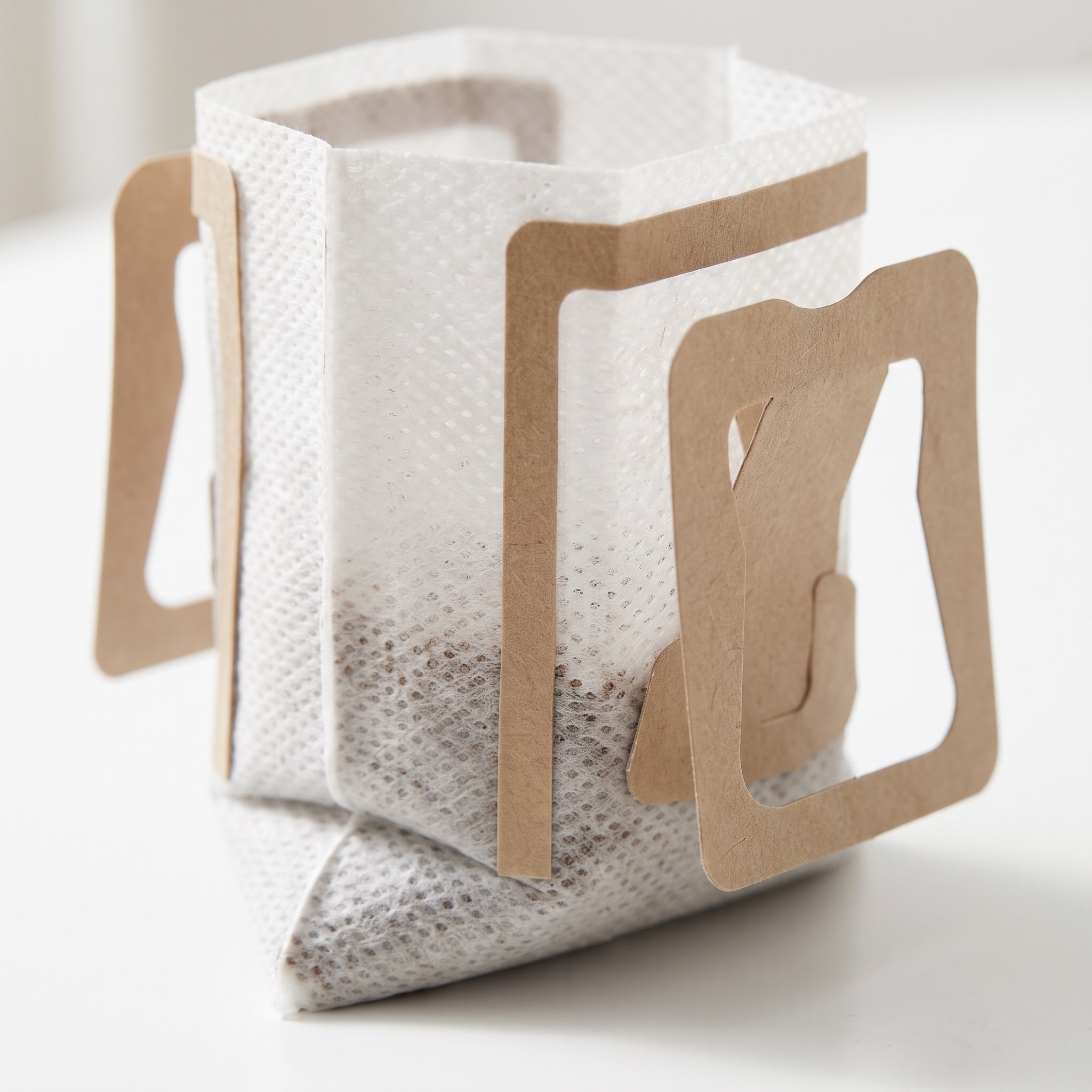
Regulation (EU) 2025/40 mandates that food contact packaging—particularly materials exposed to high heat and liquid extraction—must not contain intentionally added PFAS. For drip coffee bags, this means the inner filter mesh, the paper hanging ears, and the adhesives used in the assembly must all pass strict Total Fluorine limits. Failure to comply means the product cannot legally be sold, imported, or distributed within the European Union.
Who Issues This Certification?
The European Union sets the legal thresholds, but government bodies do not directly issue commercial compliance certificates. Instead, the burden of proof falls on the importer and the manufacturer, who must obtain verified test reports from accredited, independent third-party laboratories.
The Role of SGS (Société Générale de Surveillance)
When buyers refer to an “SGS Certificate” for Total Fluorine, they are referring to a formal Test Report issued by SGS, the world’s leading testing, inspection, and certification company. Headquartered in Switzerland, SGS operates a global network of ISO 17025-accredited laboratories.
An SGS Test Report is universally recognized by EU customs authorities, major supermarket chains, and national health agencies. Having an SGS report that explicitly states the Total Fluorine levels of your drip coffee bags fall below the regulatory limit is the gold standard for proving PPWR compliance.
What Are the Key Requirements?
To pass the SGS Total Fluorine test and comply with Regulation (EU) 2025/40, the drip coffee bag must meet specific chemical thresholds.
01. LOQ
Limit of Quantification (LOQ): The laboratory equipment must be sensitive enough to detect trace amounts of fluorine. Typically, the LOQ for Total Fluorine in packaging is around 10 mg/kg to 50 mg/kg (parts per million).
02. Threshold
The Legal Threshold: Under the PPWR guidelines for PFAS restrictions, the concentration of Total Fluorine must generally not exceed 50 mg/kg for food-contact paper and non-woven materials.
03. Homogeneity
Homogeneous Testing: The regulation requires testing all individual homogeneous parts of the drip bag. You must test the PLA/non-woven mesh, the paperboard hanging arms, and the sealing areas.
The SGS Testing Process for Drip Filter Bags
The standard method used by SGS for Total Fluorine in packaging is typically EN 14582. Here is the step-by-step testing process:
Step 1: Sample Preparation and Separation
The SGS technicians take the submitted drip coffee bag and separate it into its constituent parts (filter web vs. paper ears).
Step 2: Oxygen Flask Combustion
The sample is ignited in a sealed flask with pure oxygen. Intense heat breaks chemical bonds, converting solid fluorine into fluoride gas.
Step 3: Absorption and Extraction
An absorption solution captures the released gas, turning it into a liquid solution for analysis.
Step 4: Ion Chromatography (IC) Analysis
A highly sensitive machine detects the exact concentration of fluoride ions in the liquid.
Step 5: Final Reporting
SGS calculates the total mass relative to original weight. If listed as “ND” (Not Detected) or <50 mg/kg, it is compliant.
Benefits of Total Fluorine Compliance
How Buyers Can Verify SGS Certificates
- Scan the QR Code: Verify against the official SGS secure database.
- Verify Material Description: Ensure “Sample Name” matches your specific purchase (e.g., PLA mesh).
- Check Test Method: Ensure EN 14582 is listed alongside Ion Chromatography (IC).
- Examine the Date: Reports should be less than 12 months old for regulatory weight.
Common Mistakes Buyers Make
1. Assuming “Compostable” Means “PFAS-Free”
A material can be compostable while still leaching forever chemicals. Always demand a Total Fluorine test.
2. Testing the Wrong Components
Don’t forget the paper hanging ears! If the ears contain PFAS, the entire product is non-compliant.
3. Relying on Supplier “Guarantees”
Letters are legally worthless during an audit. Only accredited third-party test reports protect you.
4. Confusing “Total” with “Extractable” Fluorine
Regulation (EU) 2025/40 looks at Total Fluorine (absolute amount), not just what leaches out.
Practical Example: A Compliance Success Story
A German distributor found their Asian-sourced bags had 120 mg/kg Fluorine due to paper hanger sizing agents. By switching to a mechanical pressing technique, they reduced levels to “Not Detected” (<10 mg/kg), allowing their goods to clear Hamburg customs in 24 hours while competitors faced weeks of delays.
Comparison Table: Pre-2025 vs. Regulation (EU) 2025/40
| Metric / Requirement | Pre-2025 Regulations | Regulation (EU) 2025/40 (PPWR) |
|---|---|---|
| Focus on PFAS | Loosely regulated; heavy metals focus | Strict ban on intentionally added PFAS |
| Primary Test Required | OML & Specific Migration | Total Fluorine (EN 14582 / IC) |
| Acceptable Threshold | Often untested | Typically < 50 mg/kg |
| Liability Burden | Assumed safe | Strict Liability: Importer must prove safety |
Frequently Asked Questions (FAQ)
1. How much does an SGS Total Fluorine test cost?
Typically $150 to $300 USD per homogeneous material. Reputable manufacturers usually absorb this cost.
2. Will removing PFAS affect performance?
No. Advanced mechanical pressing and bio-polymers like PLA achieve the same heat resistance.
3. Does it apply to outer foil?
Yes. All packaging materials placed on the EU market must meet chemical restrictions.
4. What about the UK or US?
Both are implementing similar bans. Sourcing compliant materials now future-proofs your brand.
Conclusion & Call to Action
The era of unchecked chemical additives is over. Securing SGS Total Fluorine certification is the baseline requirement for the modern global market.
Partner with Sokoo Group for Guaranteed Compliance.
At Sokoo Group (parent company of Tonchant Packaging), our premium PLA and non-woven filter materials are rigorously tested by SGS, ensuring they are PFAS-free and fully compliant with Regulation (EU) 2025/40.
Post time: Nov-06-2026


